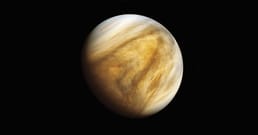
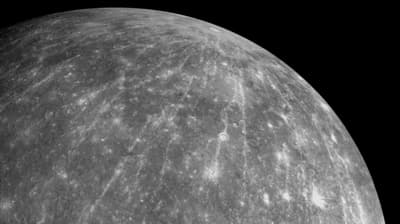
Mercury’s highly eccentric egg-shaped orbit is as close to the Sun as 29 million miles and as far as 43 million miles. It travels around the Sun every 88 days at nearly 29 miles per second, faster than any other planet. But did you know that this created double sunrises?
Due to Mercury’s slow rotation around its axis and its uneven orbital path around the sun, the sun will occasionally appear to reverse its path in Mercury’s sky and then reverse again, causing the planet to have a double sunrise.
Two Good Mornings in Mercury
Mercury spins slowly on its axis, rotating once every 59 Earth days. However, when Mercury moves the fastest in its elliptical orbit around the Sun and is closest to it, each rotation does not coincide with sunrise and sunset, as it does on most other planets.
From some parts of the planet’s surface, the morning Sun appears to rise briefly, set, and rise again. At sunset, the same thing happens to other parts of the character. One Mercury solar day or one complete day-night cycle equals 176 Earth days or slightly more than two years on Mercury.
Mercury’s axis of rotation is only 2 degrees tilted about the plane of its orbit around the Sun. Because it spins nearly perfectly upright, it does not experience seasons like many other planets. (Source: NASA)
Can You See Mercury from Earth?
Humans have long been aware that the planet is visible to the naked eye. According to Universe Today, the Sumerians mentioned the earth as early as the 2nd millennium BC, and the Babylonians referred to it as Nabu. The Romans named it after their swift-footed messenger god Mercury. According to NASA Science, astronomers Galileo Galilei and Thomas Harriot observed the planet for the first time in 1631 using the newly invented telescope. (Source: NASA)
The Fluctuating Temperature on Mercury
Despite being the closest planet to the sun, Mercury’s surface can be icy due to its lack of a heat-trapping atmosphere. According to NASA, the temperature during the day can reach 800 degrees Fahrenheit. Still, it can drop as low as minus 290 degrees Fahrenheit at night. This fluctuation equates to a temperature swing of about 1,100 degrees Fahrenheit, the largest of any planet in the solar system.
Меркурий — самая небольшая планета Солнечной системы. Эта крошечная планета имеет диаметр около 3,030 миль, что примерно равно ширине континентальных Соединённых Штатов и лишь немного больше луны Земли.
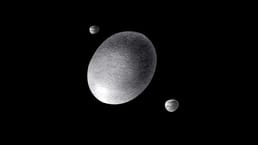
Титан, спутник Сатурна, и Ганимед, спутник Юпитера, более заметны, чем Меркурий. Долгое время Плутон считался самой маленькой планетой Солнечной системы, но после того как в 2006 году его переклассифицировали как карликовую планету, Меркурий получил титул самой маленькой планеты. (Источник: NASA)
Массивное железное ядро Меркурия
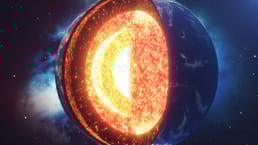
У Меркурия массивное металлическое ядро шириной около 2,200–2,400 миль, что составляет примерно 75 % диаметра планеты. Для сравнения, внешняя оболочка Меркурия толщиной всего 300–400 миль. Это массивное ядро содержит больше железа, чем любое другое планета Солнечной системы. Учёные не уверены, как оно образовалось и почему оно столь массивное. (Источник: NASA)
Изображение из TimeandDate