Most people think of mummification as something done after death. A body is treated. Wrapped. Preserved. The person is gone, and the ritual begins afterward.
Sokushinbutsu reversed that order.
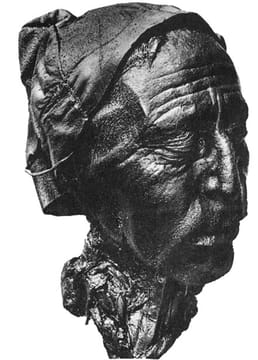
In this severe form of Japanese Buddhist asceticism, the preparation happened while the monk was still alive. Through years of discipline, the body was gradually stripped of fat, moisture, and softness, until death arrived in a form that sometimes left the remains unusually resistant to decay.[1] At first, it sounds less like religion than like a medical impossibility. Then you realize that, for the monks involved, that was part of the point.
A Practice Built on Refusal
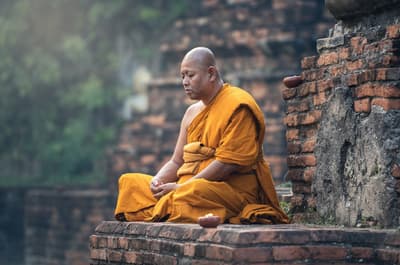
The word sokushinbutsu refers to Buddhist monks who pursued asceticism to the point of death and entered mummification while still alive.[1] The practice is most strongly associated with Japan, even though preserved Buddhist bodies are found in several countries and the larger religious world behind the idea extends beyond Japan alone.[1]
What made sokushinbutsu so extreme was not simply the suffering involved. Religious traditions are full of fasting, exposure, silence, and self-denial. This was harsher. It aimed not only at spiritual purification, but at changing the body itself, making it a less welcoming place for ordinary decomposition.
The monk was not merely preparing to die well. He was preparing to leave behind a body that would not behave the way most bodies do.
The Long Discipline of Disappearing
The process, as it is commonly described, was slow and punishing. Diet became the first battlefield. To reduce body fat and strip the body down, monks are said to have consumed only extremely limited natural foods such as nuts, seeds, roots, bark, pine needles, and resins.[1] This was not symbolic minimalism. It was metabolic war.
Body fat is one of the things that makes a corpse easier for bacteria and insects to consume. So the body had to become leaner and drier, less nourishing to the small organisms that normally arrive after death and begin their ancient work.
Then came further deprivation. Accounts of the practice describe progressive dehydration and, in some retellings, the use of toxic lacquer tea, which could induce vomiting and further reduce the body’s moisture while also making the corpse less hospitable to maggots and decay.[1] The monk was, in effect, trying to become a relic before becoming a corpse.
Why Anyone Would Do This
To modern eyes, sokushinbutsu looks almost impossible to interpret as anything other than self-destruction. But that framing misses the spiritual logic that made the practice meaningful to those inside it. In the worlds of Shingon Buddhism and Shugendō-linked asceticism, the body was not simply something to comfort. It was something to discipline, test, and transform.[1]
Extreme austerity could be understood as a route toward detachment from worldly desire. Hunger, pain, and isolation were not pointless suffering. They were instruments. What mattered was not preserving the self in any ordinary sense, but burning away attachment so completely that even the body might bear witness to the achievement.
That helps explain why preserved monks were not treated as curiosities. They were treated as holy remains, evidence of extraordinary spiritual accomplishment.[1]
The Hundreds Who Tried
This is where the story becomes stranger still. It is believed that many hundreds of monks attempted sokushinbutsu, but only 24 such mummifications have been discovered.[1] That number changes the emotional texture of the practice. This was not a reliable technique. It was an ordeal with a brutal failure rate.
In other words, the preserved monks we know about are probably the visible survivors of a much larger hidden history, one full of attempts that ended only in death and decay. For every monk whose body endured, many more seem to have vanished back into the ordinary anonymity of the dead.
That makes the discovered examples feel less like a tradition of certainty than a tradition of radical hope.
The Body as Verdict
There is something unnerving about the way success was measured. The monk could not know, in any ordinary sense, whether he had “succeeded.” That judgment came later. After death, others would examine the remains. If the body had resisted decomposition to an unusual degree, it might be recognized as sokushinbutsu.[1]
That means the final test was posthumous. The body itself delivered the verdict.
Had the fasting gone far enough? Had the tissues dried enough? Had the chemistry of the body been altered enough to resist collapse? If so, the monk’s remains might be preserved and venerated. If not, the attempt disappeared into the much larger silence of all bodies that return to the earth.
The Legend Behind the Practice
Like many severe religious traditions, sokushinbutsu attracted a story of hidden origins. A common suggestion is that Kūkai, founder of the Shingon school, brought the practice from Tang China as part of secret tantric teachings that were later lost there.[1] It is a compelling idea, the kind of story religions often tell about their most mysterious practices.
Whether or not that origin story is fully reliable, it reveals something important. Sokushinbutsu was never understood as mere bodily punishment. It belonged to a larger religious imagination, one in which esoteric knowledge, physical austerity, and transcendence could all be woven into a single path.
Why the Story Still Feels So Disturbing
The reason sokushinbutsu still grips modern readers is that it collapses categories we prefer to keep separate. Religion and physiology. Devotion and anatomy. Enlightenment and decomposition.
We are used to thinking of spiritual life as inward and invisible. Belief happens in the mind. Grace happens in the soul. Sokushinbutsu insists on something harsher: that conviction can be pressed into flesh, that discipline can become visible in skin and bone, that a religious ideal might leave physical evidence behind.
And perhaps that is why these monks continue to fascinate. Not because they escaped death. They did not. But because they approached death with such ferocity of preparation that the body itself, in rare cases, seemed to remember the effort.
It is a very old religious dream, to turn belief into matter. Sokushinbutsu may be one of the most extreme versions humanity has ever attempted.