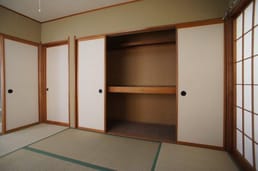

In July 2010, officials in Tokyo went looking for the city's oldest living man and found a bedroom that had become a time capsule. Sogen Kato was listed as 111. He was supposed to be a living emblem of Japanese longevity. Instead, his body was discovered mummified in his bed, and he appeared to have been dead for about 30 years.[1]
Japan's centenarian count came under scrutiny in 2010 after Sogen Kato, officially recorded as 111, was found long dead. A Justice Ministry review later found at least 234,354 listed Japanese centenarians were “missing,” raising questions about records behind the country's famous longevity statistics.
Kato had not been an anonymous name in a ledger. He was registered as Tokyo's oldest living man, a status with a ceremonial shine in a country where reaching 100 has long been treated as a family milestone and a national point of pride.[1]
The number of people living past 100 has been rising worldwide. The United Nations estimated 316,600 living centenarians in 2012 and 573,000 in 2020, almost quadruple the 2000 estimate of 151,000.[1] Japan has often stood near the center of that story. A 1998 United Nations demographic survey projected that Japan could have 272,000 centenarians by 2050, while other estimates suggested the number could approach 1 million.[1]
Those figures helped create a familiar picture of Japan, aging but unusually good at producing the very old. In 2008, Japan reported one centenarian for every 3,522 people.[1] The word centenarian may sound clinical, but in public life it often carries a warmer meaning: medicine that worked, families that endured, diets that drew attention, and lives that seemed to stretch beyond the usual limit.
The Problem With a Name on a List
Kato's bedroom forced a narrower and more awkward question. How many of Japan's oldest people were old only on paper? After his body was found, police began investigating centenarians listed as older than 105.[1] Soon afterward, Japan's Justice Ministry reported that at least 234,354 other Japanese centenarians were “missing.”[1]
The word “missing” can point in the wrong direction. These were not all missing persons in the ordinary sense of someone suddenly vanishing. The controversy exposed a records problem: in many cases, deaths had apparently not been reported, leaving names inside official systems after the people attached to them were no longer alive.[1]
A longevity statistic depends on small acts that rarely make news. A family reports a death. A local office updates a registry. A pension record closes. A congratulatory list changes. When those steps fail, a person can remain alive in the data long after life has ended.
Japan's broader demographic reality did not disappear with the scandal. The country still had a large and heavily female centenarian population, as is common in many places. In fiscal year 2016, Japan had 57,525 female centenarians and 8,167 male centenarians, about a seven to one ratio.[1] The increase in centenarians was even more skewed toward women.[1]
What changed was the way the numbers had to be read. A centenarian count is not only a measure of survival. It is also a measure of paperwork, reporting, municipal follow-through, and whether an official age still belongs to a living person. In 2010, the weak point in the system was not revealed by a chart. It was revealed by a man listed among the living, still in his bed, decades after his life had ended.