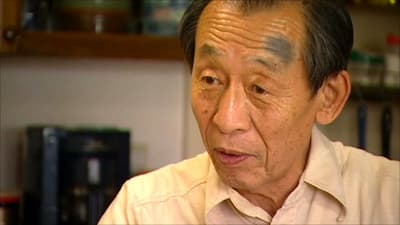
Yasuteru Yamada was 72 when the television news became too much like sitting still. At Fukushima Daiichi, workers were trying to stabilize a nuclear plant wrecked by the March 2011 earthquake and tsunami. Yamada, a retired engineer, began calling old friends, sending emails, and using Twitter to find older people willing to go in their place.[1]
After the Fukushima nuclear disaster, more than 200 older Japanese volunteers formed the Skilled Veterans Corps, offering to work at the damaged plant so younger workers would face less radiation exposure. Their argument was blunt, practical, and unsettling, age changed the risk calculation.
The group called itself the Skilled Veterans Corps. Its members included retired engineers, former power station workers, factory design experts, and other professionals, all over 60.[1] Later accounts described the network as growing to more than 400 older technicians, engineers, and ex-plant workers by the summer of 2011.[4] They were not offering a ceremonial gesture. They wanted permission to enter Fukushima Daiichi and help with the dangerous work of stabilizing the site.
The disaster began on 11 March 2011, when a magnitude 9.0 earthquake struck off Japan’s coast and generated a large tsunami.[5] At Fukushima Daiichi, the tsunami disabled power supply and cooling for three reactors, and all three cores largely melted within the first three days.[5] The accident was rated Level 7 on the International Nuclear and Radiological Event Scale, the most severe category.[2]
Nearly three months after the quake and tsunami, the plant was still releasing radiation, and Tepco had confirmed that three reactors had probably suffered meltdowns.[1] Japan had raised the emergency worker radiation exposure limit from 100 millisieverts to 250 millisieverts. Tepco said two Fukushima workers might already have exceeded even that higher limit.[1]
The logic behind the offer
Yamada did not describe his plan as a death wish. He described it as arithmetic. “I am 72 and on average I probably have 13 to 15 years left to live,” he told the BBC. “Even if I were exposed to radiation, cancer could take 20 or 30 years or longer to develop. Therefore us older ones have less chance of getting cancer.”[1]
The volunteers were not claiming radiation was harmless. They were saying that if someone had to accept a long-term cancer risk, older workers had fewer years left for that risk to develop. Younger workers, with decades ahead of them, would carry the danger longer.
Yamada lobbied the Japanese government to let the group into the power station. Officials expressed gratitude but remained cautious, and Yamada said he was talking with key government and Tepco people while acknowledging that the issue was politically sensitive.[1] A few members of parliament supported him, but the request was never simple. Nuclear cleanup work involved training, dose limits, liability, command structure, and public fear, not only courage.
The roster had a strangely ordinary texture. Many volunteers were retired engineers like Yamada. Others had worked around power plants or factories. There was also a singer and two cooks, whom Yamada said would help keep the team amused and fed.[1] Michio Ito, a retired primary school teacher helping in a cafe, was described as eager to exchange his apron for a radiation suit.[1]
Fukushima Daiichi did not reach an official cold shutdown condition until mid-December 2011, after months of emergency stabilization and cooling work.[5] Yamada’s idea remained one of the stranger human images from that crisis: emails, phone calls, Twitter messages, and retired hands raised across Japan, asking to be sent first.