Think about the most sophisticated toy from your childhood. Perhaps it was a complex LEGO set with hundreds of interlocking pieces, a high-tech gaming console, or a doll with a wardrobe of miniature silk dresses. We tend to define "toys" as manufactured goods—products born in a factory, packaged in bright plastic, and sold with a barcode. We have come to view play as something we consume.
But if you walk into a forest, or even a neglected corner of a local park, you will find the world’s most successful, enduring, and versatile toy. It requires no batteries, no Wi-Fi connection, and no purchase. It is simply lying on the ground, waiting to be picked up.
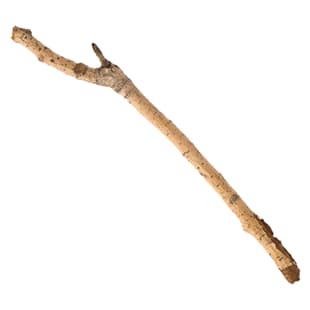
It is a stick.
The Hall of Fame Inductee
In 2008, an induction caught the public by surprise. The National Toy Hall of Fame—an institution that honors icons ranging from Barbie to the Rubik’s Cube—inducted a piece of forest debris. There was no ceremony involving plastic molds or patent filings. Instead, they recognized a simple, organic object: the stick[1].
To the curators at The Strong National Museum of Play, this was no joke; it was a recognition of a fundamental truth about human nature. The stick is widely considered one of the world's oldest toys[1]. Long before the first assembly line ever rolled to life, there was the stick. It is a tool, a weapon, a companion, and a canvas, all contained within a single piece of wood.
The Architecture of Imagination
What makes a stick so special? If you ask a child, they won't discuss the cellular structure of the wood or its aerodynamic properties. They will tell you about the magic.
A stick is a master of metamorphosis. In the hands of a child, the physical properties of the object become secondary to the narrative being constructed in the mind. One moment, it is a gleaming broadsword clashing against an imaginary dragon; the next, it is a magic wand sparking with unseen energy. It can be a majorette’s baton, a fishing pole, or a lightsaber[1].
This is the essence of what psychologists and educators call "free play." Unlike a toy that arrives with a manual—dictating exactly how it *should* be used—a stick offers nothing but potential. It provides the "freedom to invent and discover"[1]. When a child picks up a stick, they aren't just playing; they are engaging in a high-level cognitive exercise. They are practicing decision-making, spatial reasoning, and creative storytelling. They are building worlds out of nothingness.
The Original Building Block
The utility of the stick extends far beyond make-believe; it is an instrument of physical exploration. Children do not just hold sticks; they use them to interact with their environment. They use them to build, to strike balls, to poke at the mysteries of a hollow log, or to provide a steadying gait while navigating uneven terrain[1].
There is also a profound connection to the natural world inherent in this play. While modern toys often pull children toward screens and indoor environments, the stick is an invitation to go outside. It demands an exploration of the landscape—a search for the "just right" stick, one with the perfect weight, the ideal curve, or the most impressive length[1]. This search transforms a simple walk into a scavenger hunt, fostering a fundamental curiosity about the outdoors.
In an era where play is increasingly mediated by algorithms and pre-designed experiences, the stick remains a radical outlier. It is free, natural, and infinitely adaptable. It reminds us that the most powerful engine for human development isn't found in a toy box, but in the boundless capacity of the human imagination to see something extraordinary in a simple branch.
Sources
- The Strong National Museum of Play: Stick - The Strong National Museum of Play