High in the thin air of the Himalayas, amidst howling winds and blinding snow, a silhouette emerges from the whiteout. A massive, hulking shape. A creature of myth. In local folklore, this being is known as the Yeti or the Meh-Teh—a staple of indigenous belief that has haunted mountain passes for generations[1].
But step into a mid-20th-century cinema or pick up a pulp adventure novel, and you won't hear of a "Meh-Teh." You will hear of something far more visceral. You will hear of the Abominable Snowman.
It sounds like a description of a monster's character—a creature so hateful, so repulsive, that it defies human morality. But the truth is far more mundane. The "abominable" nature of the snowman isn't a biological fact or a spiritual truth; it is a linguistic accident. A single, messy mistranslation that fundamentally altered how the Western world perceived a piece of Himalayan culture.
The Anatomy of a Mistake
To understand how a legend becomes a monster, you must look at the linguistics. In the indigenous languages of the region, the creature carries names with specific, grounded meanings. One such term is metoh-kangmi. Broken down, the meaning is relatively straightforward: it translates roughly to "man-bear snow-man"[1].
It is a descriptive name. It tells you what the thing is—a hybrid of man and bear, a dweller of the snow. It is a creature of biology and environment, not necessarily a creature of malice.
However, as Western journalists and explorers began documenting these stories in the 19th and early 20th centuries, the nuances of local dialects slipped through the cracks. The metoh portion of the name—referring to the man-bear hybrid aspect—was misunderstood. Rather than being interpreted as a physical description, it was misread as a moral judgment. Seeking drama, the journalist's pen transformed "man-bear" into "filthy."
Once "filthy" entered the lexicon, the snowball effect took hold. "Filthy" became "loathsome," eventually settling into the heavy, dramatic weight of "abominable."
From Folklore to Freak Show
This was more than a typo in a travelogue; it was a narrative hijacking. By adding the word "abominable," the West stripped the Yeti of its cultural context and turned it into a caricature. It was no longer a respected, albeit terrifying, element of Himalayan belief[1]. It became a monster designed for Western consumption.
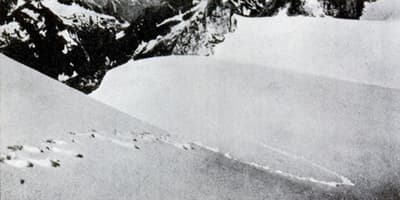
The scientific community has long viewed these reports with skepticism. Most researchers conclude that the Yeti is not a hidden species of ape-like giant, but rather a complex web of folk beliefs, perhaps fueled by sightings of bears or misinterpreted footprints in the snow[1]. But the "Abominable Snowman" label provided a far better hook for the sensationalist press than "The Man-Bear Snow-Man" ever could.
The mistake created a feedback loop. As the media leaned into the word "abominable," the public began to expect a creature that was not just large, but inherently evil. The legend grew teeth—not because the creature changed, but because the translation did.
The Power of the Pen
The story of the Abominable Snowman serves as a cautionary tale about the power of language. It reminds us that how we describe the world is often less about the reality of what we see and more about the lens through which we view it. A single misunderstood syllable can turn a local legend into a global villain.
Next time you encounter something "abominable," ask yourself: is it truly that terrible? Or has something simply been lost in translation?