You click “update” now and barely think about it. A progress bar moves. A few files are replaced. Maybe your phone restarts. The word patch sounds clean, abstract, almost bloodless.
It did not start that way.
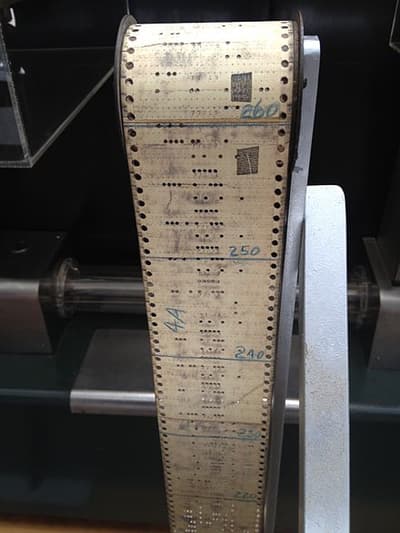
In the early days of computing, a patch was often exactly what it sounded like: a physical fix applied to physical code media. Not metaphorically. Not conceptually. Literally. Programs were stored on punched media, and if part of a program needed correcting, the damaged or incorrect section could be covered, cut out, or replaced with a patched segment.[1]
That is the part modern software quietly inherited. Long before anyone downloaded a security fix over Wi-Fi, programmers were already “patching” software with their hands.
When Code Was Something You Could Hold
It is easy to forget how physical early computing was. Code was not floating invisibly in cloud storage. It lived on punched cards and paper tape, systems that encoded instructions as patterns of holes. If the holes were wrong, the program was wrong. If the sequence broke, the machine would follow bad instructions with perfect obedience.[1]
And because those instructions existed on physical media, correcting them could become a physical act. On early machines such as the 1944 Harvard Mark I, operators used literal patches to correct punched holes by covering them.[1] A programming error was not just a logical problem. Sometimes it was a small defect in a tangible object sitting right in front of you.
That detail matters because it reveals something about the culture of early computing. The machines were new. The problems were new. But the instinct for repair was old and almost mechanical: if a section is wrong, patch it.
The Original Software Update Was Surgery
Later, when software suppliers distributed corrections, they often did not send an entirely new program. They sent a change. On paper tape or punched cards, that meant the recipient might be expected to cut out the indicated part of the original tape or deck and patch in the replacement segment.[1]
This is where the term becomes especially vivid. A patch was not just a new version. It was an insertion. A repair. A graft.
That language survived because the action was so concrete. If one part of the original sequence was wrong, you did not necessarily start over from scratch. You took the flawed section out and joined the corrected one in. In other words, you patched the program much the way someone might patch fabric, film, or wiring.
It is a strangely humble origin story for a word that now belongs to billion-dollar software ecosystems. The modern patch arrives invisibly. The old one arrived with scissors, replacement stock, and instructions.
Why the Name Stuck
Words endure when they capture the shape of a problem, and patch did exactly that. Even as the medium changed, the underlying idea remained the same. You were not replacing the entire system. You were fixing a specific defect. You were applying a targeted correction to something already in use.[1]
That is why the term survived the leap from punched media to magnetic tape, then to removable disks, then to CD-ROMs sent through the mail, and eventually to downloadable internet updates.[1] The material changed. The metaphor did not.
In fact, it barely feels like a metaphor at all, because it was earned the hard way. It began as literal repair work and only later became digital vocabulary.
From Tape and Cards to Downloads
The history of patching is also a miniature history of software distribution. First came paper tape and punched cards. Then magnetic tape. After that, removable disks made it easier to deliver corrected code physically from developer to customer. Later came CD-ROMs, mailed updates, and finally the internet, which turned patching from a logistical event into a routine background process.[1]
Each step made patching faster and less visible. It also made the original meaning easier to forget.
When a patch arrived by mail, you still felt its weight. When it arrives over the air, it seems almost natural, as if software simply heals itself. Yet the old word still whispers the truth. Underneath all the seamlessness is the same ancient idea: this part was wrong, so we fixed just this part.
The Difference Between a Patch and a Rewrite
This is also why patch never quite meant “new software.” A patch is narrower than that. It implies continuity. The thing already exists. It still mostly works. It simply needs repair, adjustment, or reinforcement.
That distinction matters. A rewrite sounds radical. A patch sounds surgical. One implies reinvention. The other implies maintenance. And software, for most of its history, has depended less on dramatic reinvention than on endless maintenance, one flaw at a time.
Which may be why the term has remained so useful. Computers changed almost beyond recognition. The maintenance mindset did not.
The Word That Still Carries Its Hardware Past
There are many computer terms whose origins have been almost completely bleached out. People “dial” numbers without rotary phones. They “hang up” without cradles. But patch still carries a faint trace of its hardware ancestry. It still sounds like repair. It still suggests something practical, local, and a little improvised.
And that is fitting, because the history of software is not just a history of invention. It is a history of correction. Programs fail. Assumptions break. Bugs appear. Users discover edge cases no designer predicted. The glamorous part is shipping the new thing. The enduring part is patching it.
So when you hear that a company has released a patch, the word is older and more literal than it seems. It comes from a time when code had holes punched into it, when errors could be covered or cut out, and when fixing software sometimes meant physically altering the thing that held the instructions.[1]
The update may now happen in silence. The word still remembers the tape.