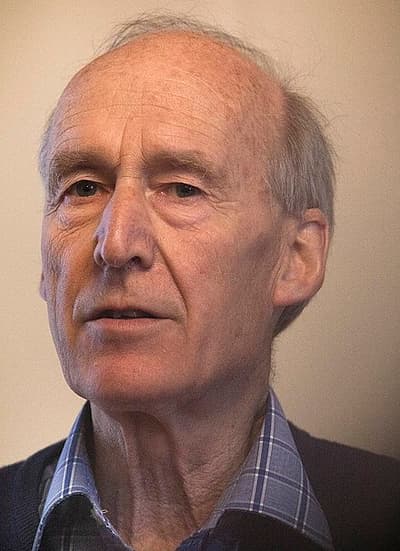
Julian Barbour was born in 1937 and works on quantum gravity and the history of science [1]. He received his PhD in 1968 from the University of Cologne, where he studied the foundations of Einstein's general theory of relativity [1]. He has spent most of his career without an academic position, supporting himself and his family partly through translation work [1]. He lives near Banbury, England [1].
The End of Time appeared in 1999 and set out the position Barbour calls timeless physics [1]. On that view, time as people perceive it is an illusion, and a number of problems in physical theory follow from assuming that time exists [1]. Barbour argues that the only evidence for the past is memory and the only evidence for the future is belief [1]. He describes each individual moment as existing in its own right, complete and whole, and calls these moments Nows [1].
Barbour calls any fixed pattern that encodes the appearance of motion, change or history a time capsule [1]. His theory is more sceptical than the block universe, because it denies the passage of time and also the existence of an external dimension of time [1]. Physics orders Nows by their inherent similarity to one another, and that ordering is what people conventionally call time [1]. The ordering comes from the actual content of each Now rather than from any moment at which it occurs [1].
The Cambridge philosopher J. M. E. McTaggart reached a similar conclusion in his 1908 paper The Unreality of Time [1]. McTaggart distinguished a tensed A-series from a tenseless B-series, and Richard M. Gale coined the labels A-theory and B-theory in 1966 [4]. B-theorists hold that the flow of time is a subjective illusion, that past, present and future are equally real, and that nothing is privileged about the present [4]. That position, often associated with eternalism, continues a dispute reaching back to Parmenides and Heraclitus [4].
In 1982 Barbour and the physicist Bruno Bertotti published a technique called best matching, which derives gravitational equations from measurements of how objects are arranged in space [1]. The work belongs to Machian dynamics, an approach that requires physics to be built from directly observable quantities [1]. The method describes gravitational effects as accurately as general relativity while dispensing with a background grid of spacetime [1]. David Wiltshire of the University of Canterbury has suggested that such a relational approach could explain the apparent accelerated expansion of the universe without invoking dark energy [1].
Modern physics treats time as inseparable from space within spacetime, and general relativity allows clocks to run at different rates depending on velocity and nearby matter [2]. Measurable time is thought to have begun with the Big Bang about 13.8 billion years ago [2]. General relativity does not describe time at the smallest intervals, where quantum mechanics treats time as a universal and absolute parameter [2]. Reconciling the two is the problem of time, and as of 2026 there is no generally accepted theory of quantum general relativity [2].
The theoretical physicist Lee Smolin refers to Barbour's ideas repeatedly in his books but is usually highly critical of them [1]. Smolin holds a realist view in which time is real, and he argues that physicists have wrongly rejected its reality by confusing mathematical models with the world [1]. He hypothesizes that the laws of physics themselves evolve over time rather than being fixed [1]. Sean Carroll has criticised Barbour and other physicists who adopt a timeless view of the universe, writing that he does not see the point of the approach and is unclear what is to be gained by it [1].
Philosophers of physics continue to argue over whether space and time are fundamental or emergent [3]. In classical mechanics time is a fundamental quantity that cannot be defined in terms of anything else, while theories such as loop quantum gravity treat spacetime as emergent [3]. Carlo Rovelli, a founder of loop quantum gravity, has described the shift as no more fields on spacetime, just fields on fields [3]. The standard second is defined as 9,192,631,770 oscillations of a hyperfine transition in the caesium-133 atom [3].