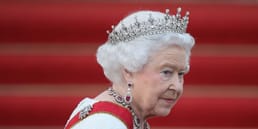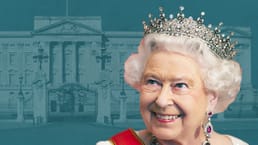
Elizabeth II died on 8 September 2022 at Balmoral Castle in Scotland at the age of 96 [3]. Her eldest child became King Charles III immediately on her death [3]. She had reigned since 6 February 1952, a span of 70 years and 214 days, the longest of any British monarch and the longest of any queen regnant in history [2]. At her death she was monarch of 15 realms, having been queen regnant of 32 sovereign states at various points during her lifetime [2].
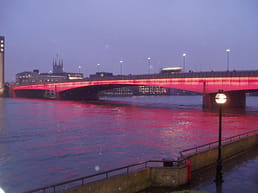
Operation London Bridge was first devised in the 1960s, and the variant covering a death in Scotland was called Operation Unicorn [3]. A former palace staff member told Business Insider that a staff hotline existed for distributing news and instructions in the event of a major event, and that most employees at the palace and associated institutions would be sent home once the announcement was made [1]. Parliamentary business, including scheduled meetings of select committees and all-party parliamentary groups, was postponed [1].
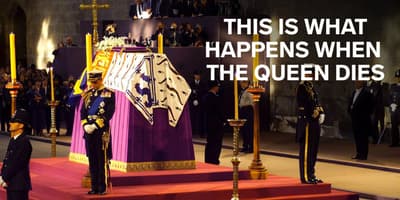
The coffin lay at rest in St Giles' Cathedral in Edinburgh from 12 to 13 September, and an estimated 33,000 people filed past it there [3]. It was then flown to London and lay in state in Westminster Hall from 14 to 19 September, where approximately 250,000 people queued to pay their respects [3]. The United Kingdom observed a national mourning period of 10 days [3].
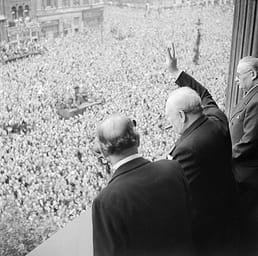
The state funeral on 19 September was the first held in Britain since Winston Churchill's in 1965 [3]. A service at Westminster Abbey was followed by a procession to Wellington Arch that featured around 3,000 military personnel and was watched by approximately one million people in central London [3]. The coffin then travelled by state hearse to Windsor for a committal service at St George's Chapel [3]. The government estimated the cost of the mourning period and funeral at £162 million [3].
Television coverage broke into regular schedules across the main channels. BBC, ITV, Channel 4 and Channel 5 all interrupted programming to cover the news, while print newspapers dedicated entire front covers to tributes [4]. Many organisations paid their respects by suspending operations or cancelling events, and landmarks around the world were lit in the colours of the Union Jack or displayed images of the Queen [4].
Charles gave his first address to the nation and Commonwealth on 9 September at 6 p.m. BST, mourning his "darling Mama" and proclaiming his son William as Prince of Wales [4]. Prime Minister Liz Truss delivered a televised address from outside 10 Downing Street, calling the Queen "the rock on which modern Britain was built" [4]. Former prime ministers John Major, Tony Blair, Gordon Brown, David Cameron, Theresa May and Boris Johnson also issued statements of condolence [4].
Two days before her death, the Queen accepted Boris Johnson's resignation and appointed Liz Truss as prime minister at Balmoral Castle rather than at Buckingham Palace [3]. Her health had declined following the death of Prince Philip in April 2021; she began using a walking stick at public engagements in October 2021 and tested positive for COVID-19 at Windsor Castle in February 2022 [3].
The Queen was interred on the evening of 19 September with Prince Philip in the King George VI Memorial Chapel at Windsor Castle, in a private service attended only by her closest family [3]. The funeral drew dignitaries from around the world and featured the largest security operation ever mounted in the UK [3].