On June 10, 1928, Maurice Sendak was born in Brooklyn to Polish-Jewish immigrants Sadie and Philip Sendak [4]. His childhood was shaped by the deaths of extended family members during the Holocaust, and he later described that period as a terrible situation [4]. Sendak decided at age 12 to become an illustrator after seeing Walt Disney's Fantasia [4]. He began his professional career in 1947 with illustrations for the popular science book Atomics for the Millions [4]. His solo debut as author and illustrator came in 1956 with Kenny's Window [4].
Sendak started work on a picture book about a child who, after a tantrum, is punished in his room and escapes to the land of wild horses [2]. Shortly before beginning the illustrations, he realized that he did not know how to draw horses [2]. At his editor's suggestion, he replaced the wild horses with the more ambiguous Wild Things [2]. The phrase came from vilde chaya, a Yiddish expression for wild animal that parents used for boisterous children [2][4]. Sendak said the title came from that phrase, which Jewish mothers and fathers used when telling a child to stop acting like a vilde chaya [4].
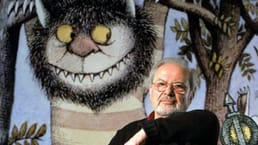
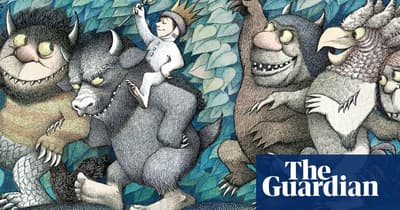
Sendak drew the Wild Things as personal creations rather than traditional monsters [1]. He soon saw that his inventions resembled his Jewish relatives from childhood, who visited the family's Brooklyn home for Sunday lunch and often told him he looked so good they could eat him up [1]. As a child, Sendak had drawn caricatures of these aunts and uncles as an escape from their chaotic weekly visits [2]. He remembered them as having crazy faces and wild eyes, and he called them grotesques [2]. When he worked on the 1983 opera adaptation, he gave the monsters the names of relatives: Tzippy, Moishe, Aaron, Emile, and Bernard [2].
Harper & Row published Where the Wild Things Are in 1963 [2]. The story follows Max, a boy in a wolf suit who causes havoc at home and is sent to bed without supper [2]. His bedroom becomes a jungle, and he sails to an island inhabited by large monsters called the Wild Things [2]. Max becomes their king and leads a rumpus, then sends the creatures to bed without their supper [2]. He feels lonely, abdicates, and returns home to find a hot supper waiting for him [2].
In 1964, librarians awarded Where the Wild Things Are the Caldecott Medal as the previous year's most distinguished American picture book for children [2]. A 2012 survey of School Library Journal readers voted it the number one picture book [2]. The book had sold more than 19 million copies worldwide as of 2009, including 10 million in the United States [2]. Some parents were concerned by the fanged monsters when the book first appeared, because the characters looked somewhat grotesque [4]. Sendak's work still drew praise for trusting the validity of children's emotions [2].
President Obama chose Where the Wild Things Are for the 2016 White House Easter Egg Roll [1]. He read the book dramatically, with First Lady Michelle Obama beside him, and the crowd responded with claws and roars [1]. The Guardian described the book as one of Obama's favorite children's books [1]. The reading brought Max's story to the crowd gathered for the event [1].
Spike Jonze directed a live-action adaptation that reached U.S. theaters on October 16, 2009 [3]. The film combined live action, costume performers, animatronics, and computer-generated imagery, and it was filmed principally in Melbourne [3]. It starred Max Records, Catherine Keener, and Mark Ruffalo, with voices by Lauren Ambrose, Chris Cooper, James Gandolfini, Catherine O'Hara, and Forest Whitaker [3]. The production cost an estimated $100 million and grossed $100.1 million, a financial flop that still received positive reviews [3]. Concerns were raised about whether the film was suitable for young audiences [3].