There is something unnerving about a performance that works a little too well. An audience is supposed to be frightened in the safe way, the theatrical way. The curtain rises, the actor transforms, the audience gasps, and then everyone goes home.
But in 1888, London was not in the mood for safe fear. Women were being murdered in Whitechapel. The killer who would become known as Jack the Ripper had turned the city into a machine for manufacturing dread. Every alley seemed to hold a possibility. Every stranger looked slightly more suspicious than he had the week before.
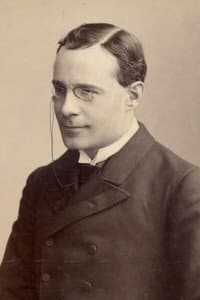
And into that atmosphere stepped Richard Mansfield, taking the stage as Dr. Jekyll and transforming before the audience into Mr. Hyde.
By all accounts, it was a remarkable performance. Mansfield became famous for it.[1] He played Stevenson’s split man at exactly the wrong, or perhaps exactly the most theatrically potent, moment in London history. So convincing was his shift from respectable gentleman to violent degenerate that at least one theatre-goer reportedly moved past applause and alarm and wrote to the police suggesting that the actor himself might be the Ripper.
When Fiction Collides With Public Panic
The timing is what makes the story endure. Robert Louis Stevenson’s Strange Case of Dr Jekyll and Mr Hyde had already introduced the Victorian public to a particularly modern horror: the idea that monstrosity might not come from outside civilized life, but from within it. The monster was not a beast in the woods. He was a gentleman with another self.
That idea landed differently in 1888 than it would have in quieter times. Jack the Ripper did not terrify London simply because he killed. He terrified it because he seemed able to move invisibly through the same city as everyone else. He was out there, but he was also among them. Respectability no longer looked like a guarantee of anything.
Mansfield’s stage success drew directly on that fear. He was known as an actor-manager of unusual force and versatility, admired for Shakespeare, comic opera, and especially for Dr Jekyll and Mr Hyde.[1] What audiences saw was not just costume acting. It was transformation, the kind that made people feel they were watching character collapse in real time.
And when a city is already primed for paranoia, a convincing illusion stops being mere entertainment. It starts to feel like evidence.
The Actor Who Seemed Too Convincing
Richard Mansfield was not some shadowy drifter who wandered into infamy by accident. He was a prominent stage figure, born in Berlin in 1857, raised partly in a transnational, artistically connected world, and eventually established as one of the most prominent English-speaking stage actors of his era.[1] He had the pedigree, the training, and the ambition of a serious man of the theatre.
Which is precisely why the accusation is so revealing.
It tells us less about Mansfield’s actual plausibility as a suspect, which was effectively nonexistent, than about what Victorian audiences feared most. The terrifying possibility was not merely that a murderer existed. It was that refinement and brutality might occupy the same body. The same face could smile in one moment and murder in the next. Jekyll and Hyde was not frightening because it was fantastical. It was frightening because it felt like an explanation.
Mansfield’s performance appears to have captured that with uncomfortable precision. His Hyde was not just evil. He was a collapse, a revelation, an eruption of something that had supposedly been there all along. In an era already asking what kind of man could cut through London and then vanish back into ordinary life, that was a dangerous thing to portray convincingly.
Why The Suspicion Mattered
It is easy to laugh at the idea of an audience member seeing a great performance and deciding the actor might therefore be a serial killer. But panic has always had dreadful standards of evidence. It reaches first for what feels emotionally true.
And emotionally, Mansfield fit a dark logic. He had shown people a man becoming a monster. Not suggested it, not implied it, but embodied it. On a stage. In front of witnesses. In a city where newspapers were full of mutilation, fear, and speculation. The leap from “he acts it brilliantly” to “perhaps he understands it too well” is irrational, but it is not hard to understand.
This is one of the enduring oddities of the Ripper era. The case produced not just suspects, but an entire culture of suspicion. Doctors, aristocrats, madmen, foreigners, nobodies, and, in Mansfield’s case, an actor whose crime was being too persuasive in public.
That detail also says something sharp about acting itself. Great actors do something mildly alarming for a living. They make us believe they are not pretending. Most of the time we call that talent. Under the pressure of mass fear, people start calling it something else.
A Victorian Nightmare In Perfect Form
What Mansfield stumbled into was the perfect Victorian collision: a story about split identity arriving at the precise moment the public had become obsessed with the idea that evil could hide behind a respectable exterior. Hyde was not simply monstrous. He was concealed monstrosity. That was the innovation. That was the dread.
And the Ripper murders made that dread feel less literary than forensic.
No one remembers Richard Mansfield today chiefly because of a police letter from a frightened theatre-goer. He is remembered because he was a major actor-manager with a formidable stage career.[1] But the accusation has endured because it captures something almost too perfect about the age. London was watching an actor dramatize the possibility that civilization was only skin deep, while somewhere beyond the theatre district, a killer seemed to be proving the same point in blood.
That is why the anecdote lasts. Not because Mansfield was ever a serious suspect. He was not. It lasts because it reveals how thoroughly a city can lose its grip on the boundary between performance and reality when fear gets there first.