In the early years of AIDS, the virus had a terrifying advantage. It was everywhere in the headlines and nowhere, in any useful scientific sense, in hand. People were dying. Fear was outrunning evidence. And over all of it hung the question that mattered most: What exactly are we fighting?
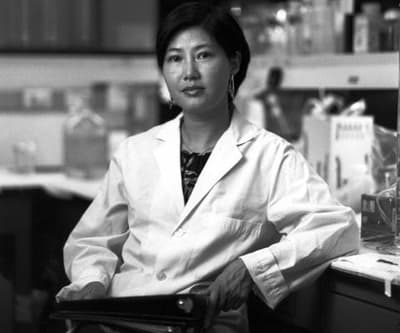
Flossie Wong-Staal helped turn that question into something scientists could finally answer.[1] In 1985, she became the first scientist to clone HIV and map its genes, a breakthrough that did more than deepen understanding of the virus. It gave researchers a workable blueprint. Suddenly HIV was no longer just a medical catastrophe. It was something that could be studied, tracked, tested, and, eventually, targeted.[1][2]
The Scientist Who Arrived at the Right Problem
Wong-Staal did not begin with AIDS. She began with the kind of training that prepares a scientist to see structure where others see chaos. Born in Guangzhou in 1946, raised in part in Hong Kong, and later educated at UCLA, she earned a bachelor's degree in bacteriology and then a PhD in molecular biology.[1][2] By the time she joined the National Cancer Institute and began working with Robert Gallo, she was already immersed in the world of retroviruses, a consequential class of viruses that copy their RNA into DNA and insert themselves into the cells they infect.[1]
That matters because AIDS did not arrive as a neat scientific problem. It arrived as a crisis. Patients appeared with rare infections and cancers. The syndrome was new, frightening, and politically charged. Researchers were not dealing with a virus they understood. They were dealing with a moving target that seemed to dismantle the immune system while the world watched.[2]
Cloning the Virus Meant Turning Panic Into Knowledge
Once HIV had been identified as the cause of AIDS, the next problem was nearly as daunting as the first. Knowing which virus caused the disease was not enough. Scientists needed to know how it was built. Which genes did what? How stable was it? Where did it mutate? Which parts might be useful for diagnosis, and which might become targets for treatment?
This is where Wong-Staal's work became decisive. In 1985, she and her colleagues cloned HIV and produced a genetic map of the virus.[1][2] That sounds dry until you stop and consider what cloning meant in this context. It meant taking something elusive and making it reproducible in the lab. It meant researchers could inspect the virus piece by piece instead of chasing it in the dark. And genetic mapping meant the virus could be understood not as a blur of threat, but as an organized system of genes with specific functions.[2]
That shift changed everything. Once the structure of HIV was known in detail, blood tests became possible on a far more reliable basis, helping screen blood supplies and identify infections with much greater confidence.[2][3] The work also laid essential groundwork for later antiretroviral drug development, because treatments are easier to design when you know precisely what machinery a virus uses to survive and replicate.[1][2]
The Map Was Not the Cure, But It Opened the Road
This is the part that often gets lost in retrospect. Wong-Staal did not produce a miracle cure in 1985. What she produced was, in some ways, more important for the long game: molecular understanding. HIV was a notoriously complex retrovirus, and her research helped identify the functions of its genes at exactly the moment that knowledge was urgently needed.[1][2] In medicine, there are moments when discovery looks less like triumph than orientation. You are still deep in the wilderness, but at last you have a map.
And maps save lives. Not instantly, not theatrically, but steadily. They tell everyone else where to go next.
That is why Wong-Staal's breakthrough mattered so much. It helped move AIDS research from fear-driven emergency into molecular precision. Instead of speaking about the virus in broad, frightening abstractions, scientists could begin speaking about sequences, regulatory genes, replication, and intervention. The conversation changed because the virus itself had, at last, been made legible.[2][3]
She Kept Going
Wong-Staal did not stop with the cloning and mapping of HIV. In 1990, she moved to UC San Diego, where she continued HIV/AIDS research and later focused on gene therapy, including ribozyme-based approaches sometimes described as a kind of molecular knife.[1][2] Her group also studied how HIV-1 proteins such as Tat were involved in Kaposi's sarcoma lesions commonly seen in AIDS patients, pushing the field toward a deeper understanding of how the virus damaged the body beyond simple infection counts.[1][2]
By then, her place in scientific history was secure. She was widely recognized for her influence, from citation rankings to later honors that reflected just how foundational her work had become.[1][2] But the simplest measure of her importance is also the clearest. She helped define the virus that defined an era.
Why Her Story Still Matters
A great deal of scientific fame goes to the moment people can see. The announcement. The cure. The headline that feels final. Wong-Staal's achievement belonged to a different category of importance. She made HIV knowable.[2] And in the history of medicine, that is often the turning point that matters most.
Because before there can be treatment, there must be understanding. Before there can be strategy, there must be structure. Before there can be hope, there must be a scientist willing to sit with an invisible enemy long enough to give it form.
Flossie Wong-Staal did that for HIV. And once she did, AIDS research was no longer staring into the dark quite so blindly.
Sources
[1] She Thought It: Flossie Wong-Staal
[2] Wikipedia: Flossie Wong-Staal
[3] Nature: Complete nucleotide sequence of the AIDS virus, HTLV-III