
Rainbow lorikeets feeding in Adelaide's Botanic Gardens drew news coverage when onlookers described the birds as sloshed, chattering incessantly and chasing their reflections into windows [1][7]. The flocks had been working the flowers of the weeping boer-bean, a tree whose nectar is sugary enough to ferment into alcohol [3][7].
The rainbow lorikeet is a medium-sized parrot rather than a small one: adults measure 25 to 30 cm including the tail and weigh between 75 and 157 g [2]. Its natural range follows the eastern seaboard from northern Queensland through New South Wales, Victoria and into South Australia, and introduced populations live in Perth, Tasmania, Auckland and Hong Kong [2].
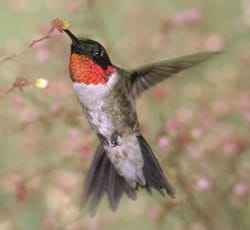
Nectar sits at the centre of the diet. Rainbow lorikeets feed mainly on fruit, pollen and nectar, and the tip of the tongue carries a papillate appendage built for gathering pollen and nectar from flowers [2]. Eucalyptus nectar matters most in Australia, with Pittosporum, Grevillea and the African tulip-tree among the other sources [2].
The weeping boer-bean, Schotia brachypetala, is a legume native to Africa south of the Zambezi River, usually 5 to 10 metres tall and occasionally reaching 20 [3]. Its deep red flowers are filled with nectar, and the weeping in the name refers to how much liquid drips or rains from shaken blooms [3]. The tree is widely planted in warm climates and is a common street tree in Australia, sometimes still called a Hottentot tree [3].
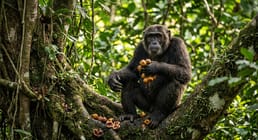
Yeast does the rest. Ethanol occurs naturally when yeasts ferment sugars in ripe and overripe fruit, and the molecule is light enough to be carried on the wind through vegetation [5]. Robert Dudley of the University of California, Berkeley, argued in his 2014 book The Drunken Monkey that primates evolved an attraction to that molecule because it marked scarce calories in tropical forest [5]. Birds feeding at sugary flowers meet the same chemistry [7].
Intoxication in animals resembles intoxication in people. At lower doses, alcohol produces mild sedation and poor coordination; at higher doses it brings slurred speech, trouble walking and impaired vision [4]. Coverage of the lorikeets compared the effect of the fermented nectar to alcohol's effect on humans [7].
The noise has a function. Ornithologists separate songs, which are longer and more complex and tied to territory and courtship, from calls, which are shorter and serve as alarms or keep members of a flock in contact [6]. Sound is produced in the syrinx at the base of the trachea, where a bird controls pitch by tension on membranes and volume by the force of exhalation [6]. Flocks feeding together keep in touch by calling [6].
Flowering times vary from tree to tree, so the boer-bean's nectar does not arrive on a fixed calendar [3]. In southern Africa the red flowers open in September and October, just after the new leaves [3]. In Australia, where the species is a common street planting, the flowering window shifts with the individual tree [3].