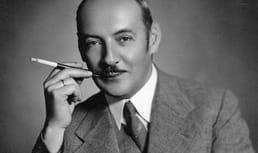
On Leo Marks’s first day at work, he was given what was supposed to be a 20-minute training exercise. It took him the entire day. Not because he was slow. Because no one had given him the cipher key.
So he did something that tells you almost everything you need to know about him, and something deeply unsettling about wartime British intelligence. Instead of asking for help, or concluding the message was impossible, he broke the code anyway.
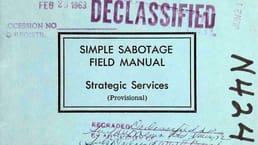
That was the kind of mind Leo Marks brought to the Second World War: quick, stubborn, slightly theatrical, and unusually hard to fool. It was also exactly the kind of mind the Special Operations Executive desperately needed. The SOE, created to carry out Winston Churchill’s order to “set Europe ablaze,” sent agents behind enemy lines to organize resistance, gather intelligence, and survive in territories where a single mistake could get you captured and killed.[1]
Marks would eventually become the organization’s chief of codes and ciphers, working closely with agents dropped into occupied Europe. His job was to protect the most fragile thing in espionage: a message that had to pass through enemy hands without betraying the person who sent it.[1]
The Problem With Secret Codes Is Usually Human
It is tempting to imagine wartime cryptography as a world of immaculate systems. Clever machines. Perfect procedures. Genius mathematicians moving symbols across a page while history waits outside the door.
But the reality was messier. SOE, as Marks knew better than most, was a strange mixture of brilliance and amateurism.[1] It contained extraordinary courage and extraordinary sloppiness. Agents were asked to do impossible things under impossible pressure. Some were given weak procedures. Some were given habits that were supposed to be secure and were not.
That mattered because resistance work depended on radio traffic, and radio traffic was dangerous. The moment an operator began transmitting, the clock was running. Enemy direction-finding teams could locate them. German intelligence could intercept messages. And if a cipher system was predictable, capture did not just compromise one person. It could unravel an entire network.
Marks understood early that codes were not just puzzles. They were life support.
A Bookseller’s Son In A War Of Messages
He was not an obvious bureaucrat. He came from a literary world, the son of the celebrated antiquarian bookseller Benjamin Marks, and he carried that sensibility into intelligence work. After the war, that same instinct would pull him toward writing for stage and screen, eventually linking him to films including Peeping Tom.[1] But during the war, literature gave him an advantage that machines could not.
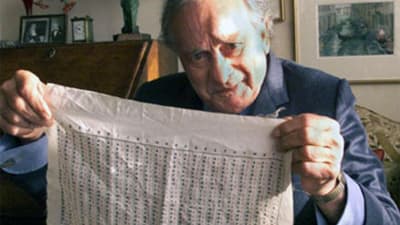
Marks had a feel for language. He understood patterns, memory, rhythm, and the way people cling to familiar words under stress. That turned out to be crucial, because one of the weak points in British field cryptography was that agents were often encouraged to use personal poems as code keys. It sounded ingenious. It was memorable, portable, emotionally sticky.
It was also, in Marks’s view, a terrible idea.
If an agent chose a famous poem, the enemy might guess it. If they chose a favorite poem, it might be found in a pocket diary or recalled under interrogation. A code was only as strong as the human being carrying it, and human beings under fear do not behave like theory.
The Man Who Tried To Make Codes Less Romantic
Marks pushed against that kind of false cleverness. He preferred tighter discipline. He is often remembered for supplying agents with original poem ciphers, material the enemy would be far less likely to recognize or reconstruct. It was a practical fix, but it was also a revealing one. He was fighting not only German intelligence, but British complacency.
That tension ran through the whole SOE story. The organization was full of daring, but daring does not automatically produce competence. Marks occupied the uncomfortable role of the man in the room insisting that romance kills people. A glamorous spy service could still be undone by laziness, vanity, or procedural drift.
And drift was not hypothetical. It was catastrophic.
When Bad Security Becomes A Death Sentence
One of the darkest episodes connected to SOE was the collapse of its Dutch network. German intelligence penetrated it, and some 50 agents were executed despite warnings that something had gone badly wrong.[1] This was not the kind of failure one can file under bad luck. It was a demonstration of what happens when a secret service mistakes traffic for trust and procedure for proof.
For Marks, this was the central horror of the work. Codes were not abstract devices. If they failed, real people vanished. If a transmission was accepted when it should have raised alarm, an agent could be dropped into a trap. If a compromised network kept being treated as alive, the bureaucracy itself became an accomplice to the enemy.
That is what makes his first-day anecdote feel larger than it first appears. A missing key should have stopped the exercise cold. Instead, Marks solved it. The story flatters his intelligence, yes. But it also exposes the world he had entered, a world where basic mistakes could pass unnoticed unless someone sharp enough caught them first.
Why Leo Marks Still Feels Modern
There are many wartime heroes remembered for courage under fire. Leo Marks mattered for a more unnerving reason. He understood that systems fail at their weakest human point, and he spent his war trying to harden that point before more people died.
He was not merely a codebreaker in the romantic sense. He was a skeptic inside an organization that badly needed skepticism. He saw that secrecy is not created by calling something secret. It is created by method, discipline, and an almost impolite refusal to trust what feels good enough.
After the war, he would go on to a complicated and sometimes controversial career in writing for film and theatre.[1] But the wartime version of Leo Marks remains the most arresting: a young cryptographer dropped into a half-chaotic covert war, discovering almost immediately that the exercise in front of him was broken, and fixing it not with authority, but with intellect.
That is why the story lasts. Not just because he cracked a code he was never supposed to crack. But because he instantly grasped the real lesson hidden inside the exercise. In espionage, the dangerous thing is rarely the code itself. It is the assumption that someone else must already have checked.