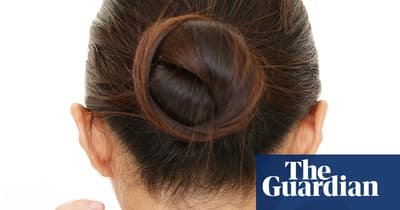
A damages claim reported on 27 October 2017 put an 18-year-old student's hair at the centre of a case against the Osaka prefectural government. She sought 2.2m yen, about £14,700, for the anguish caused by repeated orders to colour her naturally brown hair black, and said the dye had damaged her hair and left rashes on her scalp [1].
Before she enrolled at Kaifukan high school, her mother told teachers that the girl had been born with brown hair and was therefore not breaking a rule requiring all students to have black hair [1]. Teachers told her to dye it black or face expulsion, and ordered her to colour it again when brown tinges remained, according to Japanese media reports [1].
School staff told her mother they would ask foreign exchange students with blond hair to comply as well, Kyodo News reported [1]. Masahiko Takahashi, Kaifukan's headteacher, declined to comment on the case but acknowledged that the school prohibits students from colouring or bleaching their hair [1].
The student had not attended classes since September 2016 and said she was suffering pain and irritation caused by the hair dye [1]. The prefectural government asked the court to reject the claim [1]. Coverage did not name her because she was considered a minor [1].
A survey of 170 high schools in Tokyo, reported by the Asahi newspaper in 2017, found that 90 of them asked students with lighter hair to provide photographs of themselves as infants or in junior school to prove the colour was natural [1]. Almost 60% of the schools surveyed asked for proof of some kind [1].
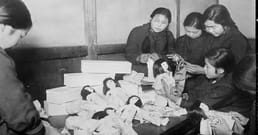
Most junior high and high schools in Japan require students to wear a uniform, a practice that replaced the kimono in the late 19th century and produced the gakuran for boys in the Taishō period and the serafuku for girls in the 1920s [2]. The codes attached to those uniforms reach hair colour, makeup, jewellery and skirt length [1]. The headteacher's statement that Kaifukan bans colouring and bleaching left open whether dyeing brown hair black counts as a breach [1].
The Ministry of Education, Culture, Sports, Science and Technology manages education nationally, and compulsory schooling covers nine years at elementary and lower secondary level [3]. Within that system, schools set and enforce their own appearance rules, as Kaifukan's ban on bleaching shows [1][2]. The claim was filed against the prefectural government rather than the school [1].
Coverage of the Osaka case noted dress codes that extend beyond hair, including bans on makeup and jewellery and requirements that students' skirts be a certain length [1]. The dispute itself turned on a question of fact her mother raised before term began: whether the brown in her hair was hers to begin with [1].