In 2011, Somali pirates attacked 237 ships, the most destructive year of the crisis [3][5]. Warships from the United States, the European Union, NATO, China, India, Russia and Japan patrolled the Gulf of Aden, and shipping companies posted armed guards, strung razor wire and built citadels where crews could lock themselves in [3][5]. The attacks continued anyway [3]. The April 2009 hijacking of the Maersk Alabama and the capture of its captain, Richard Phillips, became the best known case [3][5].
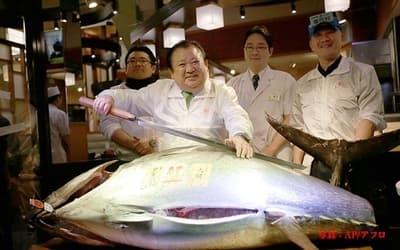
Kiyoshi Kimura heads Kiyomura Corporation, which runs the Sushi Zanmai chain across Japan, and the Japanese press calls him the Tuna King [1][4]. Around 2012 he flew to the Somali coast and met men who had taken part in piracy [3][6]. He said he wanted to understand why they did it, and that nobody he asked had actually spoken to the pirates [4][6].
The waters off Somalia hold some of the richest yellowfin grounds in the Indian Ocean [3][5]. Foreign trawlers worked them for two decades while no functioning government policed the coast, and Somali fishermen who had once fished from small boats were pushed off their own shoreline [3][5]. Somalia is estimated to have lost about $300 million a year since 1991 to unauthorized extraction of marine resources, including dynamite fishing [2]. Kimura concluded that the men did not want to be pirates, that they wanted to feed their families and the fishing had collapsed [3][6].
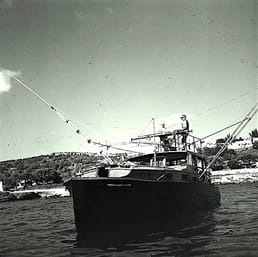
Kimura says his company sent four of its own boats to the coast [4][6]. Crews were taught to catch yellowfin, shore freezer capacity was got working so the catch would keep until shipping, and the Somali government was urged to join the Indian Ocean Tuna Commission, which the country had not belonged to [4][6]. He committed to buying the catch at a stable price so a tuna earned money the day it came out of the water [3][6]. Kimura showed Monocle a medal from Djibouti in 2019 and has cited it as recognition for the work [6][8].
The International Maritime Bureau's yearly count fell from 237 attacks in 2011 to 75 in 2012 and 15 in 2013, the lowest since 2006 [3][5][7]. Attacks in the first half of 2012 dropped to 69 from 163 a year earlier [4]. By 2015 successful Somali hijackings had stopped, and the anchorages where captured ships had sat for years were empty [3][7].
The International Maritime Bureau credits international navies, the hardening of vessels, the industry's Best Management Practices, private armed security teams and the stabilizing influence of Somalia's central government [3][7]. Its director, Pottengal Mukundan, said naval actions play an essential role and there is no alternative to a continued presence [4]. Kimura does not appear in naval or industry accounts of the decline [7].
By Kimura's own account his first visits came around 2012, the same year the attack count began to fall [8]. Japanese coverage of the story noted the overlap and treated the causal claim as unproven [8]. Nobody outside his interviews has measured the program, and four boats on one stretch of coast are not a national fishing industry [7]. In his 2016 interview with Harbor Business Online he said the venture was not yet turning a profit [6].
Somali coastal communities describe the conflict as beginning with defense against foreign trawlers that took their fish and closed off traditional grounds, and some groups called themselves the people's coastguard [2]. Some pirates said they would stop if a national Somali coastguard secured the waters [2]. Kimura's boats and his offer to buy tuna addressed part of that grievance on part of the coast [3][7]. The version that circulates online, in which a sushi chain owner single-handedly ended Somali piracy, is rated false [6], though it still appears in popular fact collections [9].