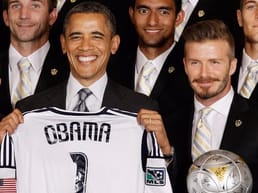
"Black Man Given Nation's Worst Job" ran as The Onion's headline after Barack Obama won the presidency in 2008 [1][4]. The satirical paper described the economic and political mess the new president would inherit instead of celebrating the historic result [1]. The joke worked by saying the opposite of what the occasion seemed to call for, and readers had to rebuild the intended meaning from the mismatch. The Onion began as a weekly print paper in Madison, Wisconsin, on August 29, 1988, and has traded on that kind of inversion ever since [4].
Edmund Spenser's 1579 annotation to The Shepheardes Calender holds the first recorded English use of sarcasm, a word taken from the Greek sarkazein, meaning "to tear flesh, bite the lip in rage, sneer" [2]. The adjective sarcastic did not appear until 1695 [2]. Psychologists have mostly treated the habit as a defect. Clifford Lazarus called sarcasm "hostility disguised as humor" and warned that frequent use overwhelms the emotional tone of a conversation [2].
In 2015, Francesca Gino of Harvard Business School, Adam Galinsky of Columbia Business School and Li Huang of INSEAD published a series of experiments in Organizational Behavior and Human Decision Processes [1][7]. Participants were randomly assigned to sarcastic, sincere or neutral conditions, then worked through a simulated conversation in which they delivered a sarcastic remark, received one, or exchanged neutral lines [1].
People in the sarcasm conditions went on to perform better on creativity tasks than those in the sincere conditions or the control group [1]. Gino described the mechanism by email: expressing or decoding sarcasm forces both speaker and listener to hold the literal meaning apart from the intended one, and that act of abstraction is what appears to feed creative thinking [1]. Earlier intuition held that the mental gymnastics of sarcasm signaled superior cognitive processing, but the direction of the causal link was untested, and no one had shown a cognitive benefit for the person on the receiving end [1].
Gino said the creative gain carries a relational cost that both expressers and recipients absorb, and that the cost shrinks when the two people already trust each other [1][8]. Galinsky added a caveat of his own: naturally creative people may simply be more likely to reach for sarcasm, which would make creativity a cause rather than a consequence [1].
Brain imaging has located part of sarcasm processing in the right parahippocampal gyrus, and understanding a remark of that kind requires second-order interpretation of the speaker's intention [2]. Neuropsychologists report that people with damage to the prefrontal cortex struggle with nonverbal aspects of language such as tone [2]. Sarcasm delivered without a cue like a flat voice or a rolled eye generally appears around adolescence, later than lying, which children manage by about age three [2].
Robert Sternberg, a psychologist who studies creativity, describes its products as "something original and worthwhile," and Michael Mumford found broad agreement that creativity involves the production of novel, useful output [3]. The 2015 experiments measured performance on creativity tasks immediately after a single exchange, so the results describe a short-term boost rather than a lasting trait [1].
Harvard placed Gino on unpaid administrative leave in June 2023 after an internal investigation found she had committed research misconduct, and the university revoked her tenure and dismissed her in May 2025 [5]. The investigation examined four papers [5]. Galinsky, the study's other senior author, is the Vikram S. Pandit Professor of Business and chair of the management division at Columbia Business School [6].