A man who failed Thomas Edison's employment test remembered enough of the questions to give them to reporters. Edison had been looking for employees who could retain large quantities of information. One rejected applicant promptly demonstrated a use for that skill that the employer had good reason to regret.[1][2]
Among the questions the man recalled were the voltage used on streetcars, the manufacture of sulfuric acid, and the causes of tides. An applicant also needed to locate Copenhagen and Manchuria, and name a country besides Australia where kangaroos lived. According to the Saturday Evening Post's account, the questionnaires usually exceeded 140 questions and varied with the position. Technical and business questions occupied only part of the page; most tested general knowledge.[2]
Applicants wrote their answers beneath the questions, with no multiple-choice options to jog a reluctant memory. The online version offered by the National Park Service is gentler: interns adapted selected questions into multiple-choice form in 1998. Edison's applicants had to supply the answer themselves.[1] They could bring an engineering education to the examination and still leave the geography questions blank.
Theodore Edison was a gifted student at the Massachusetts Institute of Technology when he failed his father's test, the Park Service records. His father had attended school for only a few months. Edison's mother taught him reading, writing, and arithmetic, and he went on teaching himself through books.[1][3] When college graduates came looking for work, he wanted to know what they had picked up outside their courses. He believed people who could remember many different things would make quick business decisions.[1][2]
By May 11, 1921, objections to the questionnaire were appearing in the New York Times. As the Post recounts, critics asked what this collection of miscellaneous facts could tell an employer about an experienced engineer's reasoning. The Post's editors came to Edison's defense the following month. They welcomed an employer looking for signs of learning beyond the classroom.[2] With the questions circulating, readers could examine the hiring rule for themselves, one awkward question at a time.
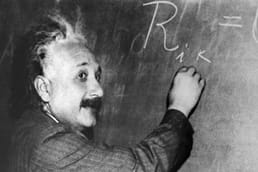
Albert Einstein encountered a list of the recalled questions during his 1921 visit to Boston. Asked for the speed of sound, he admitted he did not know it. In the Post's account, he said he did not burden his memory with facts he could easily find in a textbook.[2] Edison wanted an answer available immediately; Einstein was prepared to reach for a book.
The New York Times printed the answers as well as the questions, according to the Park Service. Edison had to change his test more than once.[1] The rejected applicant had carried enough of the examination away in his memory to help put it into newspapers. The next applicants could arrive having read both sides of the page. Edison needed fresh questions.
Sources
- National Park Service: The Edison Test
- The Saturday Evening Post: Could You Pass Thomas Edison's Job Application Test?
- National Park Service: Edison Biography
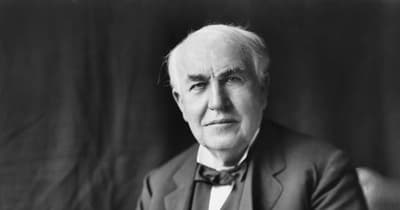
Photo: Thomas Edison, circa 1922. Louis Bachrach / Bachrach Studios, Library of Congress; restoration by Michel Vuijlsteke. Public domain, via Wikimedia Commons.