
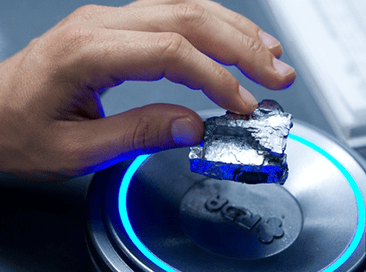
You’re sitting in a high-stakes engineering meeting. The blueprints are spread across the table, the math is flawless, and the vision is breathtaking. You’re designing a spacecraft to withstand the crushing pressures of a gas giant, or perhaps a bridge that spans a chasm no human has ever crossed. But then, the lead engineer sighs, leans back, and delivers the killing blow: "We just don't have the unobtainium for it."
To a casual observer, it sounds like a joke—a bit of sci-fi shorthand used to dismiss the impossible. You’ve seen it in Hollywood blockbusters like Avatar, where a glowing mineral drives the plot, or in The Core, where a mythical substance is the only thing standing between humanity and extinction. But in the world of physics and high-level engineering, "unobtainium" isn't just a movie trope. It is a real, frustrating concept that exists in the gap between what we want to build and what the laws of nature actually allow.
The Placeholder for the Impossible
The term didn't start on a film set; it started in the workshop. While its exact origins are debated, it emerged as technical jargon used to describe a material that possesses the perfect set of properties for a specific task—properties that, quite simply, do not exist in our current periodic table [1].
Think of it as a placeholder for perfection. If you are designing a pulley system and need it to be completely massless and perfectly frictionless, you aren't looking for a specific alloy of steel or aluminum. You are looking for unobtainium. You are looking for a material that defies the fundamental constraints of friction and mass. In this context, the word isn't describing a substance; it's describing a deficiency. It is a linguistic admission that the math works, but the universe isn't cooperating.
From Fiction to the Laboratory
The term's beauty lies in its versatility, occupying a shifting space between