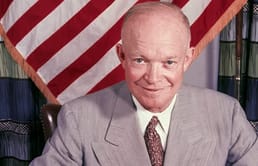
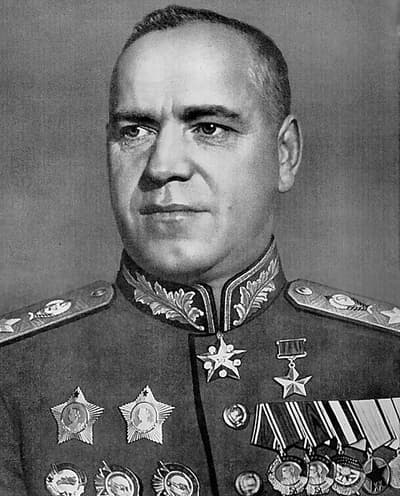
In September 1959, Nikita Khrushchev sat with Dwight D. Eisenhower in the United States and mentioned a detail that did not sound like summit business. Georgy Zhukov, the retired Soviet marshal whose name was tied to Moscow, Kursk, Berlin, and Germany’s surrender, liked fishing.[1]
After Khrushchev told President Eisenhower that Georgy Zhukov liked fishing, Eisenhower sent the Soviet marshal a set of fishing tackle. Zhukov reportedly valued the American gift so much that he used it exclusively for the rest of his life.
Zhukov’s life had not been arranged for quiet hobbies. Born in 1896, he rose through the Red Army and became chief of the General Staff in January 1941, months before Germany invaded the Soviet Union.[1] During the war, he became one of the commanders most closely associated with the Eastern Front, the Battle of Kursk, the march on Berlin, and the formal surrender of Germany.[1]
After victory, Zhukov did not disappear into a ceremonial retirement. He served as military governor of the Soviet occupation zone in Germany, then returned to high office later as Soviet minister of defense from 1955 to 1957.[1] His public life, though, remained dangerous. In October 1957, he was removed from power, part of a political fall that left him famous but cut off from command.[1]
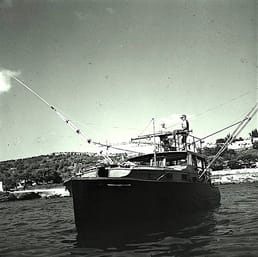
The fishing story belongs to that smaller life after power. Zhukov’s retirement account describes him receiving visitors, including former subordinates, and going on hunting excursions.[1] The same account notes a domestic interest in fish, calling him a keen aquarist, while Khrushchev’s remark to Eisenhower framed the hobby as fishing.[1] Either way, the American president heard a private clue about an old wartime counterpart and answered with equipment for leisure, not diplomacy.
A Gift Too Small for a Summit, Too Personal to Vanish
The record gives the object only in plain outline: fishing tackle.[1] It does not list the rod, reel, line, hooks, lures, case, or maker. That absence keeps the gift from becoming a collector’s inventory. What remains is the gesture, Eisenhower sending something useful to a man who had once stood across the Allied map from him and now lived under the shadow of Soviet politics.
The timing gives the tackle its strange weight. It did not arrive in 1945, when Allied victory could still make almost any exchange feel official. It came in 1959, when Eisenhower was president of the United States, Khrushchev was the Soviet leader visiting America, and Zhukov was no longer at the center of Soviet power.[1] The gift crossed the Cold War divide as a small courtesy between men connected by the war that had made them historic.
Zhukov’s later status improved, but only so far. After Khrushchev was deposed in October 1964, Leonid Brezhnev restored Zhukov to favor without restoring him to power.[1] The marshal’s popularity could be used, but his command was not returned. He remained a symbol, useful and contained, until his death in 1974.[1]
That is why the tackle lingers. The grander titles around Zhukov are easy to recite: Marshal of the Soviet Union, wartime commander, minister of defense. The fishing gear is quieter, but more intimate. According to the account, he respected Eisenhower’s gift enough to use it exclusively for the rest of his life.[1] A man remembered for moving armies ended with visitors, recollections, hunting trips, and the same American tackle chosen again and again.