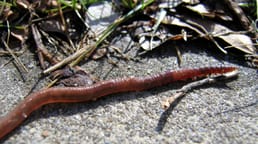

In July 2018, a team of Russian scientists working with Princeton University reported that two nematodes recovered from Siberian permafrost had resumed moving and eating after being thawed in the lab [1][5]. The roundworms came from the republic of Yakutia in northeastern Siberia. The paper appeared in Doklady Biological Sciences, and the initial age estimate was about 40,000 years [1]. If the claim held, the worms would be Earth's oldest living animals [1].
Researchers screened more than 300 soil samples from the Arctic permafrost before selecting two that contained well-preserved nematodes [1][5]. One came from a fossil rodent burrow in the Duvanny Yar outcrop and dated to roughly 32,000 years ago. The other, older specimen was taken from a glacial deposit near the Alazeya River and dated to about 41,700 years. Both worms were female, and they had been buried about 100 feet and 15 feet below the surface [1].
The worms had been kept in a laboratory at minus 4 degrees Fahrenheit before the experiment [1]. Researchers then defrosted them in petri dishes alongside an enrichment culture and held them at 68 degrees Fahrenheit. After several weeks the nematodes began moving and eating [1][5]. The previous record for a nematode revived after dormancy was 39 years [4][5].
Outside researchers raised the contamination problem almost immediately. Robin M. Giblin-Davis, a nematologist at the University of Florida, told Gizmodo that revival was theoretically possible for worms protected from structural damage, but warned that the ancient samples could have been contaminated by modern organisms [1]. The Russian team said it had followed sterile procedures and argued that the burial depths ruled out modern inclusion, since seasonal thawing in the region reaches only about three feet [1].
A follow-up study published in PLOS Genetics on July 27, 2023, named the worms as a new species, Panagrolaimus kolymaensis, after the Kolyma River [3][4]. The same paper pushed their age to 46,000 years, based on radiocarbon dating of plant material sealed in the same burrow [3][6]. "The radiocarbon dating is absolutely precise, and we now know that they really survived 46,000 years," co-author Teymuras Kurzchalia said [3].
Byron Adams, a biologist at Brigham Young University, remained unconvinced. He told Scientific American that the dating established the age of the plant material, not the worms, and that the authors had not shown the animals were not surface contaminants [3][4]. The 2023 paper nonetheless described a survival mechanism: the worms reduce metabolism to near zero in a state called cryptobiosis, and they accumulate trehalose, a sugar that protects against dehydration [4][6].
Laboratory tests showed that a slow drying period before freezing improved survival at minus 80 degrees Celsius [6]. The team also put the lab workhorse Caenorhabditis elegans through the same two-step routine, and dried then frozen dauer larvae revived and developed normally after 480 days [6]. The Siberian worms reproduce asexually by parthenogenesis and carry three sets of chromosomes, and researchers raised more than 100 generations of them in culture [4].
The original two worms are no longer alive, though some of their descendants still are [4]. Whether the frozen millennia count toward an animal's lifespan is a separate question. A survey of long-lived organisms notes that some species can suspend metabolism for long periods and resume afterward, and that it is unclear whether dormant time should be counted [2]. The authors of the 2018 paper pointed to cryomedicine, cryobiology and astrobiology as fields that might benefit from understanding how a multicellular animal shuts down and restarts [1][5].