In the spring of 1902, Walter Timmis carried an oddly specific complaint to Buffalo Forge's New York office. His client did not need a room to feel nicer. Sackett & Wilhelms, a Brooklyn lithography shop, needed paper to stop changing size.
The trouble was color. The shop printed fine multicolor work one layer at a time. When the air grew damp, the paper swelled. When the air dried, it shrank. A sheet that accepted black ink in the morning might not be the same sheet by the time red or blue arrived. The color register slipped. Finished pages became waste. Production days disappeared. Judge magazine was one of the jobs at risk.[1]
It is a wonderfully unromantic origin story. Modern air conditioning began because a room kept editing a magazine.
Buffalo Forge handed the puzzle to Willis Carrier, a 25-year-old Cornell graduate who had already designed heating plants, a lumber dry kiln and a coffee dryer. On July 17, 1902, he initialed drawings for Sackett & Wilhelms. The question in front of him was not how to cool people. It was stranger and more industrial: how do you make air hold still enough for ink?
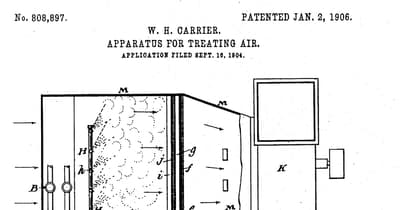
Carrier's answer treated the room like another machine in the printing process. He pushed air across coils cooled with water, then balanced coil temperature and airflow until the air reached the right dew point. The installation used fans, ducts, heaters, steam pipes for humidification and temperature controls. Carrier's company history says the system was designed to keep the plant near 55 percent humidity year-round, with a cooling effect equal to melting 108,000 pounds of ice per day.[1]
That first machine did not look like the thing humming in a bedroom window. It was built for magazine pages wrinkled by damp air, and it reached Sackett & Wilhelms years before Carrier's patent made the idea official.[2][3] The old priority is easy to miss in a heat wave: the target was moisture before it was sweat.[4]
Once factories saw the trick, they had reasons to want it. Air could spoil chocolate, swell tobacco, snap thread, fog film or bend paper out of tolerance. Cooling was useful, but obedience was the prize. The room itself had become part of production, and Carrier had found a way to make it behave.
Comfort arrived later, almost as a side effect with better marketing. Public buildings, theaters, trains, ships, hospitals and homes learned to borrow a technology that had first served products, not bodies.[3] That reversal is the human part of the story. People did not redesign indoor life because they first wanted perfect comfort. They did it because paper, ink and other materials were less forgiving than people.
So picture the beginning as a page, not a breeze. A sheet travels through the press. The black stays under the red. The image lands where it should. The room is still hot enough to be a room in Brooklyn, but for the paper, something astonishing has happened: the weather has been told to wait.