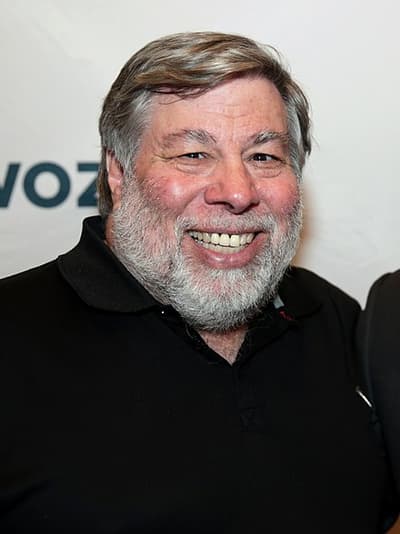
Most tech billionaires spend years learning how to look comfortable around vast amounts of money. Steve Wozniak never really did.
That is strange, because he helped build one of the most lucrative companies in modern history. Apple did not merely succeed. It became one of the defining corporate machines of the age. And yet one of its co-founders spent decades talking about money less like a prize and more like a contaminant.
In 2017, Wozniak said he did not want to be near money because it could corrupt your values.[1] That is not the sort of sentence people usually say after helping create a corporate empire. It is especially not the sort of sentence they say if they think wealth is the point of the story.
Wozniak never really did.
The Engineer Who Never Worshipped The Scoreboard
Stephen Gary Wozniak, born in 1950 and known almost universally as Woz, is one of the key architects of the personal computer revolution.[1] In 1976, he co-founded Apple with Steve Jobs.[1] Wozniak designed the Apple I and, even more importantly, the Apple II, the machine that helped turn personal computing from a hobbyist fantasy into consumer reality.[1]
That should have been enough to make him a classic Silicon Valley archetype, the brilliant engineer who discovers that technical genius can be converted into mountains of cash. But Wozniak always seemed oddly uninterested in that conversion. He liked building things. He liked elegant design. He liked engineering cleverness for its own sake. Wealth, in his telling, was never the moral center of the project.
That difference mattered early, and it mattered most when Apple stopped being a scrappy company and started becoming a serious one.
The IPO Test
A company’s initial public offering is one of those moments that reveals what people really think success is for. Suddenly the numbers get huge, the paper becomes real, and everyone has to decide whether wealth is something to hoard, deploy, share, or worship.
When Apple was heading toward its public offering, Wozniak looked around and saw something that bothered him. Some early Apple employees, people who had helped build the company, were not positioned to benefit the way top insiders would.[1] So he did something that now sounds almost impossible in modern tech mythology.
He offered roughly $10 million of his own stock to early employees.[1]
This became known as the “Woz Plan,” and it was not an act of financial optimization. It was an act of fairness. Wozniak believed the people who had contributed should get to share in the upside.[1] He was not asking what he could maximize. He was asking what would feel right.
Steve Jobs did not agree. According to Wozniak’s account, Jobs refused to do the same with his own shares.[1] That split tells you almost everything about the philosophical distance between the two men. One saw equity as something to protect. The other saw it as something that could turn ugly if it stopped being human.
Money As A Corrupting Force
Wozniak has been unusually consistent about this. Over time, he kept returning to the same basic suspicion: that too much proximity to money distorts people. In 2017, he said plainly that he did not want to be near money because it could corrupt your values.[1]
That line works because it reverses the normal script. Money is usually described as freedom, proof, leverage, safety, optionality. Wozniak treated it more like radiation. Useful at a distance, perhaps. Dangerous if it starts seeping into your moral wiring.
And this was not a pose adopted by someone who had failed to make money. Wozniak was rich. He had already won by every conventional metric. Which made the statement more interesting, not less. It suggested that he was speaking not from resentment, but from experience.
The Difference Between Woz And The Industry He Helped Create
This is part of what makes Wozniak such an unusual character in the Apple story. Jobs was the great mythmaker, the product obsessive, the man of velocity and control. Wozniak was the engineer with an almost stubbornly humane streak, someone whose public image remained bound up with playfulness, generosity, and a certain indifference to hierarchy.[1]
He was a philanthropist as well as an engineer, and much of his later life reflected that same tendency to value people, education, and experience over pure accumulation.[1] Even when discussing Apple’s rise, he often came across less like a tycoon guarding treasure than like a builder still faintly surprised that the thing got so big.
That is rare in any industry. In Silicon Valley, it is almost suspiciously rare.
The Moral Weirdness Of A Co-Founder Who Shared
The stock story matters because it cuts through mythology. It is easy to praise generosity in the abstract. It is much harder to part with shares when those shares are about to become very valuable. That is when ideals usually begin developing exceptions.
Wozniak went the other way. He gave up part of his stake on purpose because he thought the people around him deserved a piece of what they had helped create.[1] He did this not after the fact, not when the money no longer mattered, but at precisely the moment when it mattered most.
That makes his later comments about money feel less like branding and more like evidence. He had already acted on that worldview when it cost him something real.
A Founder Who Never Quite Believed In Worshipping Wealth
The easiest way to misunderstand Steve Wozniak is to see him merely as the lovable technical half of Apple’s founding duo. That undersells the more interesting part. Wozniak represents a version of technological success that never fully surrendered to the religion of accumulation.
He helped create immense wealth and remained publicly wary of what wealth does to people. He reached the center of one of capitalism’s great success stories and kept talking as if the dangerous thing was not scarcity, but letting money rewrite your values.[1]
That may be why the old Apple stock story still lands so hard. It is not just a story about generosity. It is a story about a founder who looked at a fortune coming toward him and decided the real test was whether he could keep it from changing who he was.