Hy Myers had a horse, a few chickens, and one very good piece of stationery. After the 1916 baseball season, the Brooklyn outfielder went home to rural Ohio, decided his contract offer was too small, and printed a letterhead that made his modest place sound grand: MYERS'S STOCK FARM.[1]
In 1917, Brooklyn player Hy Myers talked his way into a raise by pretending his small Ohio farm was prosperous enough to replace baseball. When owner Charlie Ebbets came to check, Myers borrowed cattle and horses from neighbors to make the bluff look real.
The letter he mailed back to Charlie Ebbets was polite enough to sting. Myers returned the unsigned contract and said he was doing so well with the stock farm that he could not afford to play ball anymore. He would miss Brooklyn, he wrote, and the boys, and the fans.[1]
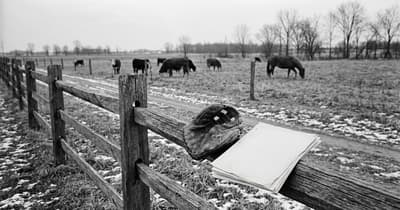
Ebbets had other unsigned players that winter, and he chose the owner's old remedy: go look a man in the eye. Myers heard he was coming and hurried around to more prosperous neighbors, borrowing enough livestock to fill the pastures around his home near Kensington, Ohio.[1]
One look at the crowded pasture settled it. Ebbets gave Myers the raise he wanted. SABR's account adds a little extra caution to the comedy: Myers did not rush the animals home right away, in case Ebbets came back for a second look. Afterward, he thanked the neighbors with a barn dance.[1]
Two summers later, the box scores made the pasture joke smaller. Myers led the National League in triples in 1919 and again in 1920, with Baseball Reference recording 14 the first year and 22 the next.[2] Baseball Almanac shows the same late-career swell in his Brooklyn line: 73 RBI in 1919, then 80 in 1920.[3] The borrowed livestock had helped him buy time for the player he was about to become.
The salary dispute feels strange now because the proof was so visible. Myers did not bring an agent into a conference room. He brought cattle into a field. The argument was made in hoofprints, fences, and the possibility that a ballplayer might simply stay home if the pasture looked profitable enough.
After Ebbets left, the animals still had to go back to their real owners. That is the part that keeps the story from becoming too slick. The raise was real, the farm was mostly borrowed, and for one afternoon a few neighbors' cows helped turn a wooden fence in Ohio into a negotiating table.