
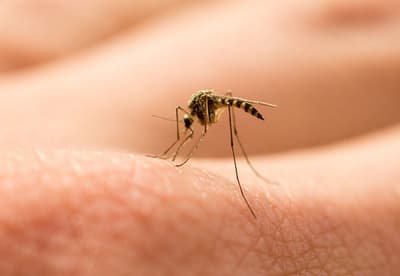
Inside a recovered stolen car in Seinaejoki, Finnish police noticed something most investigators would have swept away as speck-sized rubbish: a dead mosquito, with blood still fresh enough in its body to make the insect worth bagging as evidence.[1]
In a Finnish car theft case, police said DNA taken from blood inside a dead mosquito found in the abandoned vehicle matched a man in the police register. The suspect denied stealing the car, and a prosecutor still had to decide whether the insect-borne sample was strong enough for charges.
The car had disappeared in June from Lapua, about 380 kilometers, or 235 miles, north of Helsinki.[1] Several weeks later, it turned up in Seinaejoki, roughly 25 kilometers from where it had been stolen.[1] That was ordinary enough for a stolen vehicle. The useful witness inside it was not.
A recovered car gives investigators a cramped world of surfaces: seats, handles, fabric, dust, the small places where a person may have left a trace. In this case, the trace was not a fingerprint or a dropped receipt. Officers saw that the mosquito appeared to have recently sucked blood, so they sent the insect away for laboratory analysis.[1]
The tests produced a DNA profile from the blood, and that profile matched a man on the police register.[1] The suspect did not accept the police version of events. According to the BBC, he denied stealing the vehicle and said he had merely been hitchhiking, taking a lift from another man.[1]
A witness too small for the training manual
Sakari Palomaeki, the police inspector in charge of the case, knew how strange the evidence sounded. He told the BBC it was the first time Finnish police had used an insect to try to solve a crime.[1] “It is not usual to use mosquitoes,” he said. “In training we were not told to keep an eye on mosquitoes at crime scenes.”[1]
A mosquito does not know it is evidence. It does not remember who opened the door, who sat in the car, or who drove it away. It feeds, rests, and dies. If the blood in its abdomen came from someone who had been inside the vehicle, the insect could become a tiny container for human DNA.
Palomaeki also pointed to the quieter achievement behind the find. “It is not easy to find a small mosquito in a car,” he said, adding that the discovery showed how thorough the crime scene investigation had been.[1] Someone had to look closely enough at the recovered vehicle to notice an insect that could easily have been mistaken for debris.
The mosquito sample did not automatically end the case. A prosecutor still had to decide whether the evidence was strong enough for charges to be pressed.[1] That caveat matters because the insect did not prove a full story by itself. It placed a DNA match inside a chain of circumstances: a stolen car, a recovery weeks later, a dead mosquito, a blood meal, a database hit, and a suspect offering another explanation for how his DNA might have been there.
Still, the image is hard to shake. A car stolen from Lapua is found weeks later near Seinaejoki. Investigators lean into the interior, searching for what people leave behind. Somewhere inside the cabin, instead of a confession or a perfect fingerprint, there is a dead mosquito holding a few drops of someone’s blood.