In 1913, Korea's Japanese colonial government issued a directive that restricted paid massage work to legally blind practitioners [4]. The measure created a monopoly meant to secure employment for visually impaired people at a time when few other jobs were open to them [4]. Officials justified it partly on the idea that blind workers had a more developed sense of touch, and licensing registries limited entry to those certified as blind and trained in the craft [4]. The restriction took hold during the colonial period and stayed on the books after liberation in 1945 [4].
South Korea's current statute, Article 82(1) of the Medical Service Act, still limits the national massage therapist licence to people who are visually impaired under the Act on Welfare of Persons with Disabilities [5]. There are two routes to the licence. An applicant can complete a physical therapy training course at a special school equivalent to high school, or finish middle school and train for two years or more at an institute designated by the Minister of Health and Welfare [5]. Both certificates are issued by the city or provincial governor [5]. No amount of foreign study or international certification lets a sighted person obtain one [5].
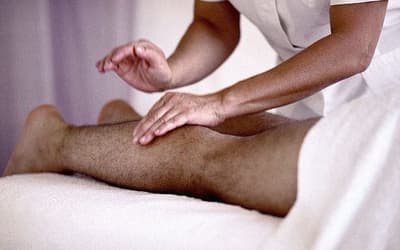
Unlicensed massage for profit carries up to three years in prison or a fine of 30 million won [4]. Neither the Medical Service Act nor the Public Health Control Act contains a clause punishing the person receiving the massage [5]. In a case reported in 2026, a shop owner who hired unlicensed staff to rub customers' arms and legs was fined 5 million won, and no customer was charged [5].
The Constitutional Court of Korea, which sits in Jongno, Seoul, and has nine justices with power to nullify unconstitutional laws, has reviewed the licensing rule repeatedly [1]. In 2008 it upheld the law against claims that it violated equality principles, finding that the exclusive right served a compelling interest in protecting blind practitioners' livelihoods [4]. The court has confirmed the system's constitutionality five times in total [5]. Its record is not one-sided: in 2006 it struck down a requirement in the subordinate Rules on Massage Therapists that applicants be unable to see, holding that the regulation went beyond what the statute delegated [5].
South Korea's unemployment rate for people with disabilities is 7.8%, roughly twice the national rate, and their average wage is 54.6% of the national average [3]. The Employment Promotion Law for Persons with Disabilities requires employers with more than 300 staff to reserve 2% of jobs for disabled workers, yet only 0.91% of positions are held by them [3]. Around 7,000 visually impaired practitioners work in licensed massage parlors nationwide [4].
Thai, Chinese and Swedish massage shops operate in a legal grey zone outside the anma licence, and therapeutic styles such as Thai, sports and aromatherapy massage are treated separately from the licensing regime [5][4]. The 2016 National Disability Survey counted about 2,683,400 people with disabilities in South Korea, roughly half of them with physical disabilities [3].
The 2004 Act on the Punishment of Intermediating in the Sex Trade targets facilitation of sexual services, including those disguised as massage in hotel-style parlors [4]. The link between massage businesses and prostitution is old and international: in 1894 a British Medical Association inquiry into massage practice in London found prostitution commonly tied to unskilled workers holding forged qualifications, which pushed legitimate practitioners to form the Society of Trained Masseuses [2]. Korean enforcement targets intermediation rather than the massage itself [4].