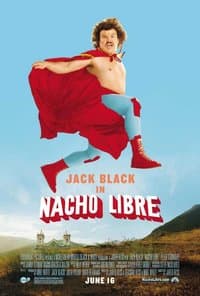
The life of a Catholic monk is traditionally defined by silence, asceticism, and a strict vow of poverty. One spends their days in quiet contemplation, serving a community through prayer and humility. The last thing anyone expects from such a man is a spandex bodysuit, a flamboyant cape, and a high-flying leap off a turnbuckle into a crowd of cheering fans.
In the dusty arenas of Mexico, however, this isn't a fever dream. It is the reality of a man who decided that the best way to serve God was to take a few hits to the ribs in a wrestling ring.
When we think of the 2006 cult classic Nacho Libre, we recall Jack Black’s manic energy and his portrayal of a cook moonlighting as a luchador to fund an orphanage[1]. It is a hilarious, heartwarming tale of faith and flying elbows. But beneath the cinematic comedy lies a surreal truth: the film is a highly stylized tribute to a man who actually lived this impossible life.
The Man Behind the Mask
His name is Sergio Gutiérrez Benítez, but to the world of Lucha Libre, he is known by a much more formidable title: Fray Tormenta, or "Friar Storm"[1].
The story of Fray Tormenta is one of radical devotion. Unlike the character in the film, who navigates the comedic tension of hiding his identity from his fellow monks, Benítez’s journey was driven by a practical, desperate necessity. He wasn't wrestling for fame or the thrill of the spectacle; he was wrestling to keep the lights on in his orphanage.
For twenty-three years, Benítez stepped into the ring, donning a mask to protect both his identity and his vocation. In the world of Mexican wrestling, the mask is sacred—it is the soul of the performer. For a priest, the mask served a dual purpose: it allowed him to inhabit a persona capable of grit and violence while preserving the dignity of his priestly office[1]. He became a bridge between two worlds that most assume are diametrically opposed: the sacred and the profane, the quiet of the chapel and the roar of the arena.
From Comedy to Reality
Nacho Libre captures the essence of this duality, even if it trades the priest's profound sense of mission for a more slapstick approach to religious life[1]. In the movie, the protagonist Ignacio struggles with the conflict between his ascetic vows and his earthly desires—specifically his love for a visiting nun. It is a comedic exploration of the human struggle to balance spiritual devotion with instinct.
However, the real-life Fray Tormenta’s struggle was less about romance and more about survival. Every slam, every suplex, and every bruise was a contribution to the well-being of the children in his care. He transformed the physical toll of professional wrestling into a form of social service. While Jack Black’s character navigates the hilarity of being a "secret" luchador, Benítez navigated the complex reality of providing for others through a medium that many in the Church might have found scandalous.
Perhaps the most striking parallel—and the most touching piece of reality—is the mask itself. In the film, the mask is a tool for comedic deception. In real life, it became a symbol of a dual identity. Even as he transitioned back into his priestly duties, the connection to his "Storm" persona remained part of his legacy. He proved that one does not have to abandon their humanity, or even their physical strength, to serve a higher calling.
The Legacy of the Friar
It is easy to dismiss Nacho Libre as just another mid-2000s comedy. But when you look closer, you see the shadow of a man who redefined what it means to be a servant of the people. Fray Tormenta didn't just tell a story of faith; he fought for it, one match at a time. He showed us that sometimes, the most spiritual thing you can do is get back up after you've been knocked down.