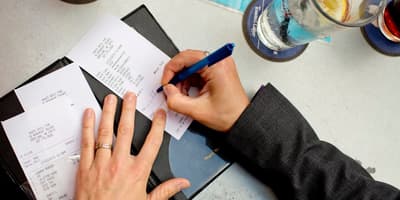
Federal law lets U.S. employers pay tipped workers a cash wage of $2.13 an hour, a figure unchanged since 1991 [2][6]. The arrangement rests on a tip credit: if tips and wages together fall short of the $7.25 federal minimum, the employer must make up the difference [2][5]. Tips subsidize pay at the vast majority of the country's nearly 650,000 restaurants [1].
Tipping began in Tudor England as a master-serf custom in which a servant received extra money for work done well [5]. By the 17th century, overnight guests at private homes were expected to hand sums called vails to the host's servants, and customers soon began tipping in London coffeehouses [5]. Wealthy Americans traveling in Europe in the 1850s and 1860s picked up the habit and brought it home, hoping to seem aristocratic [1]. The popular story that "tip" began as an acronym for "To Insure Promptness" is a myth [1].
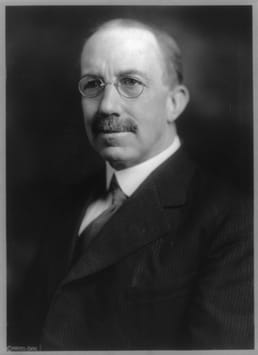
In the decades after the Civil War, most American diners opposed the custom, calling it condescending and classist [1]. Critics thought it un-American because it grew out of European aristocracy [7]. Anti-tipping laws reached the books in a handful of states but proved nearly impossible to enforce [8]. In 1916 William Rufus Scott published "The Itching Palm," a polemic whose first chapter was titled "Flunkyism in America" [8]. Scott wrote that tipping "is a cancer in the breast of democracy" [7].
After the Civil War, restaurant and railway employers hired newly freed Black men and women and paid them nothing, leaving them to live on gratuities [7]. The Shriver Center on Poverty Law states that tipping "was introduced as a way to exploit the labor of former slaves" [6]. Saru Jayaraman of Restaurant Opportunities Centers United describes a restaurant lobby that demanded the right to hire freed slaves, mostly Black women, pay them nothing, and let them live entirely on tips [7]. Nina Martyris, who has written on the history, notes that owners opening restaurants in Chicago and New York wanted cheap labor and hired freedpeople as waiters and cooks [8].
The Fifteenth Amendment, ratified on February 3, 1870, barred the federal government and the states from denying the vote on account of race, color, or previous condition of servitude [3]. It said nothing about wages, hiring, or restaurants. The exclusion that pushed freedpeople into unpaid tipped work ran through other channels. Black Codes enacted during Andrew Johnson's presidency restricted the rights of freedmen [4], and many who did not end up sharecropping found work only as servants, waiters, barbers, and railroad porters [1].
The Fair Labor Standards Act of 1938 set the first federal minimum wage at 25 cents an hour but excluded hotel, restaurant, and other service workers [7]. Amendments in 1966 brought those workers in and created a sub-minimum wage for tipped employees, provided tips and wages together reached the minimum [7]. The tipped minimum has stayed at $2.13 since 1991, and inflation has eroded its purchasing power [2][7].
From 2010 to 2012, the U.S. Department of Labor found that 84 percent of more than 9,000 investigated restaurants violated wage and hour laws, including 1,200 tip credit violations [7]. Over 27 percent of Black restaurant workers live in poverty [6]. Research on American tipping finds gratuities vary with a worker's age, sex, race, and hair color, and are only tenuously tied to service quality [5].
Seven states and Guam now apply the same minimum wage to tipped and non-tipped employees, and the District of Columbia plans to eliminate its tipped wage by 2027 [2]. In Chicago, where the subminimum wage was $6.40 against a $13 minimum, a coalition proposed phasing out the lower wage by July 2023 [6]. Tipped workers of color there were offered living wage opportunities 53 percent as often as white tipped workers [6].