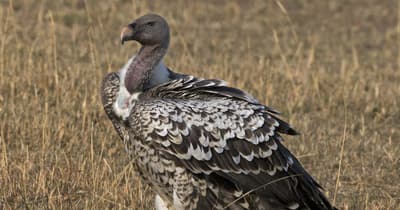
The highest-flying bird ever reliably recorded was not an eagle or an albatross. It was Rüppell’s vulture, an African scavenger confirmed at 37,000 feet, about the cruising altitude of a commercial jet.[1]
That sounds ridiculous until you look at what the bird is built for. Rüppell’s vultures are huge, with wingspans that can exceed eight feet, and they spend their lives soaring over enormous stretches of the Sahel and East Africa while searching for carrion.[1][2] They are not brute-forcing their way upward. They are specialists in riding rising air cheaply and staying aloft for a very long time.[2][3]
The real trick is physiological. Birds that fly at extreme altitude have to keep exercising in air thin enough to leave most animals starved for oxygen. Research on high-flying birds points to a useful package of traits: efficient lungs, strong oxygen delivery, effective breathing patterns, and large wings that make staying airborne less expensive.[3] In Rüppell’s vultures specifically, scientists found hemoglobin with especially high oxygen affinity, exactly the sort of blood chemistry that helps load oxygen when there is not much of it to take.[4]
That is what makes the record so good. A vulture does not look like an aerodynamic celebrity. It looks heavy, bald, and faintly disreputable. But it's not designed for glamour. It's built to patrol vast landscapes, spot a carcass before its rivals do, and do all of that while burning as little energy as possible.[1][2][3]
The 37,000-foot figure stuck because this was not folklore about a distant speck in the sky. It was treated as confirmed evidence of a flight at 11,300 meters, in air where the average temperature is around minus 56 degrees Celsius.[1] That puts the bird in an environment that feels closer to mountaineering or aviation than ordinary wildlife watching.
And yet this astonishing flier is in trouble. Rüppell’s vulture is listed as Critically Endangered, threatened by poisoning, habitat loss, and other human pressures.[1] That matters for a practical reason as well as a moral one. Vultures are cleanup crews. They strip carcasses fast, which helps limit disease and keeps ecosystems from filling with rot.[2]
So when you picture a vulture, do not just picture something circling death. Picture one of the most extreme fliers on Earth, cruising in jet-level air, doing one of nature’s dirtiest jobs with extraordinary grace.[1][3][4]
Sources
- Rüppell’s vulture species profile, Wikipedia
- Gyps rueppellii (Rüppell's griffon), Animal Diversity Web
- Elevated performance: the unique physiology of birds that fly at high altitudes, Journal of Experimental Biology via PubMed
- High altitude and hemoglobin function in the vultures Gyps rueppellii and Aegypius monachus, PubMed