Most literary mistakes die quietly. A date gets misprinted. A translator improvises. A subtitle shifts. Then there is the rarer, stranger kind of mistake, the kind that sits on shelves for more than a century pretending to be one book while actually being another.
That is what happened to Dracula in Iceland.
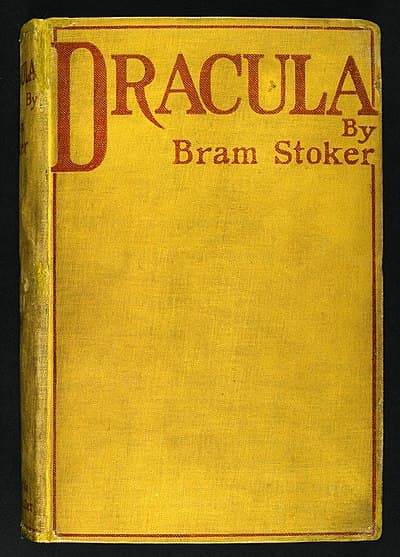
In 1901, just four years after Bram Stoker published his famous vampire novel, an Icelandic version appeared under the title Makt Myrkranna, usually rendered in English as Powers of Darkness.[1] For generations, it was treated as exactly what it seemed to be: a translated edition of Dracula. But in 2014, scholars recognised something unsettling and oddly appropriate. This was not merely Dracula in another language. It was a significantly different novel, shorter in length, altered in plot, and notably more sexual than the book readers thought they knew.[1]
Which means that for more than a century, one branch of the Dracula story had been hiding in plain sight, wearing the mask of a translation.
The Version Everyone Assumed Was Normal
The original Dracula, published in 1897, helped establish the modern vampire. It gave the world Count Dracula, the journey from Transylvania to Britain, the band of pursuers led by Abraham Van Helsing, and that eerie Victorian mixture of science, superstition, blood and desire.[1] It also did something structurally unusual. It told its story through diaries, letters, telegrams, ship logs and newspaper clippings, creating the sense that the novel had been assembled from evidence after the fact.[1]
The Icelandic Makt Myrkranna looked, at first glance, like just one more international version of that success. That was not implausible. Dracula moved quickly across borders, and unusual publishing practices were hardly rare at the turn of the century. Readers assumed they were encountering Stoker’s story in local dress.
But assumptions are powerful because they save everyone time. If a book arrives labelled as a translation of a famous novel, very few people stop to ask whether it might instead be a literary cousin, or a theft, or a mutation.
The Discovery in 2014
The surprise came when the Icelandic text was studied closely and compared with Stoker’s original. In 2014, it became widely recognised that Makt Myrkranna was no faithful translation at all.[1] It had a smaller page count. It reorganised and rewrote large sections. Characters and events shifted. The atmosphere changed. The sexual content became more pronounced. What had long been filed away as an imported version of a known book turned out to be something much stranger: an alternate Dracula that had somehow slipped into literary history under false credentials.[1]
This is the sort of revelation that makes the whole publishing world look faintly haunted. A translation is supposed to carry a text across a language barrier. This one had carried it into another form altogether.
A Castle Full of Different Shadows
Part of what made the Icelandic version so startling was not just that it changed details, but that it changed emphasis. Stoker’s Dracula is certainly full of erotic tension, but much of it remains coded, repressed and diffused through Victorian manners. The Icelandic text pushes things closer to the surface.[1] Desire is less hidden. The atmosphere is more sensual. The whole thing feels less like a careful transfer and more like someone took the dark energy of Dracula and tuned it to a slightly more fevered frequency.
That matters because vampire fiction has always lived at the border between fear and appetite. Blood is intimacy disguised as violence. Seduction is danger disguised as invitation. If the Icelandic version is sexier, it is not because someone accidentally added spice to a bland recipe. It is because one of the central ingredients was intensified.
How Does a Different Novel Hide for a Century?
The answer is partly boring, which is how many great mysteries survive. Languages create silos. Icelandic is not widely read outside Iceland. Literary scholarship is full of blind spots that persist simply because few people have reason, or ability, to compare obscure editions line by line. Add enough time, enough assumption, and enough confidence in a label, and a major textual anomaly can sit quietly for generations.
There was also the matter of authorship and transmission. The Icelandic text was linked to Valdimar Ásmundsson, who adapted it from a version associated with Stoker’s work, and the path from original to Icelandic appears to have been more tangled than anyone first assumed.[1] That is part of why the discovery fascinated scholars. It was not just that the text was different. It was that the difference hinted at a hidden history of editing, adaptation, serialisation and possible lost variants.
In other words, the book was not simply misread. It may have descended from a much more complicated publishing chain than readers had realised.
The Perfect Dracula Twist
There is something wonderfully appropriate about all this. Of all novels to split into doubles, disguise themselves, cross borders and emerge in altered form, of course it would be Dracula. Bram Stoker’s book is obsessed with infiltration. Count Dracula arrives in England under cover. He moves among the living while carrying something foreign and transformative inside him. He turns one body into another version of itself.
And then the novel itself seems to have done something similar.
An Icelandic “translation” enters literary history. It looks close enough to the original to avoid suspicion. It circulates for decades. Only much later do readers realise that something slipped through customs with extra teeth.
Why Readers Love This Story
The appeal of this discovery is not just academic. It satisfies a deep readerly fantasy: that the books we think we know might still contain hidden chambers. Most classics are overexposed. Their plots are familiar, their symbolism mapped, their adaptations endless. But here was a genuinely strange afterlife, a reminder that literature is also a physical and historical object, vulnerable to mistranslation, improvisation, distortion and accident.
And sometimes those accidents are not degradations. Sometimes they are strange acts of creation.
The Icelandic Makt Myrkranna did not replace Dracula. It revealed that Dracula had a shadow text, an alternate body moving alongside the canonical one for more than a century.[1] Shorter, stranger and more sexual, it exposed how unstable even a famous novel can become once it enters the machinery of international publishing.
The Real Lesson
What this episode really shows is that books are less fixed than readers like to imagine. We talk about “the text” as though it were singular and stable, but literature in the real world passes through translators, editors, serial formats, printing quirks and national markets. Most of the time those changes are small. Occasionally they produce a parallel novel hiding in plain sight.
So the strange Icelandic Dracula is more than a curiosity. It is a reminder that canon is often held together by habit. Sometimes all it takes to disturb that habit is one scholar, one close comparison, and one uncomfortable realisation: everyone thought they were reading Stoker, but they were also reading someone else’s dark imagination all along.