If you handed an English speaker a manuscript from the year 1200, you would not be handing them “old English.” You would be handing them a wall. The words would look half-familiar at best, and the meaning would mostly vanish on contact.
In Iceland, the story is stranger.
The country’s great medieval sagas, written down from the 12th century onward, are not sealed off behind the kind of linguistic rupture that cut modern speakers off from much of the medieval past elsewhere in Europe. They were written in Old Icelandic, a western dialect of Old Norse, and modern Icelandic has changed so little, at least by the standards of living European languages, that those old texts remain unusually close to the present.[1]
That does not mean a modern Icelander can casually glide through every saga line as if it were written last week. But it does mean something remarkable: the language of a thousand-year-old literary culture never drifted all that far from the people still speaking it now.[1]
The Accident of Isolation
The oldest preserved texts in Icelandic date to around 1100 AD.[1] Many were based on poetry and laws that had been preserved orally, carried in memory before they were carried on parchment.[1] Then came the works that made Iceland famous far beyond its size: the Icelandic sagas and the eddaic poems, written in Iceland from the 12th century onward.[1]
That alone would have been enough to give the country a formidable literary inheritance. What made Iceland unusual was what happened next, or more precisely, what largely did not happen next.
Languages are normally worn down by conquest, prestige borrowing, bureaucracy, trade, fashion, and sheer proximity to other powerful tongues. Vocabulary shifts. Grammar erodes. Spelling drifts away from speech. The distance between ancestor and descendant widens until the old language starts to feel less like family and more like archaeology.
Iceland mostly dodged that fate.
The Rule That Changed Surprisingly Little
Iceland spent centuries under outside rule, first Dano-Norwegian and later Danish, from 1536 to 1918.[1] On paper, that sounds like the kind of political arrangement that should have remade a language from the top down.
But according to the historical record, it had relatively little effect on the evolution of Icelandic.[1] Unlike in Norway, where Danish influence reshaped the written language much more heavily, Icelandic remained the daily language of the general population.[1] That matters. A language that stays rooted in ordinary life has a better chance of carrying its older structure forward.
So while Iceland was politically subordinate, linguistically it stayed stubborn. The language did change, of course. No living language survives a millennium in a glass case. But Icelandic changed markedly less than the other living Germanic languages.[1]
That is the core of the saga miracle. The bridge never broke.
Why The Sagas Still Feel Reachable
The sagas were written in Old Icelandic.[1] Modern Icelandic is not identical to Old Icelandic, but it remains close enough that the medieval texts still belong to a living continuum rather than a dead one. That helps explain why Iceland’s literary past has such an unusual cultural presence. In many countries, foundational texts must be translated, normalized, or otherwise mediated before ordinary readers can approach them. In Iceland, the originals remain much nearer the surface.
That closeness is not just sentimental. It is structural. Icelandic preserved a more archaic form than other living Germanic languages, even while continuing to function as the language of everyday life.[1] The result is a rare historical alignment: the language of national identity and the language of medieval literature never fully split into separate worlds.
Put differently, Iceland did not merely preserve old stories. It preserved a language stable enough that those stories could remain legible across centuries.
A Language Protected On Purpose
This stability was not only an accident of geography. It was also something Icelanders consciously valued. One of the striking features of Icelandic history is the degree to which the language was treated as something worth guarding, not just using.
Its orthography, for example, remained conservative. Later reforms did not try to sever the written language from its historical roots. They tended instead to regularize spelling while keeping it close to the inherited system.[1] That matters more than it sounds. A conservative writing system can act like a cultural memory device. It keeps the past from becoming visually foreign.
And because Icelandic literary culture placed extraordinary prestige on its medieval texts, there was an incentive not to let the language drift too far from them. The sagas were not obscure documents in an archive. They were part of what Iceland understood itself to be.
The National Superpower Of A Small Island
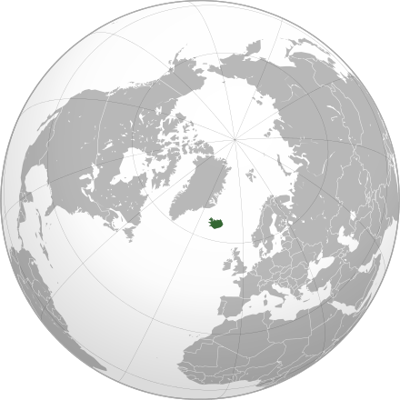
There is something almost paradoxical about this. Iceland is a small, isolated island in the North Atlantic, yet it ended up with one of the deepest time links between modern speakers and medieval literature anywhere in Europe.
That link helped turn the sagas into more than relics. They became usable inheritance. A modern Icelander approaching saga prose is not approaching a lost tongue in the way a modern English speaker confronts Beowulf. The distance is real, but it is not absolute. The medieval language still feels recognizably ancestral rather than alien.[1]
And once a society experiences its past that way, history stops being remote. It becomes conversational.
A Thousand-Year Conversation
This is what makes Icelandic so fascinating. The language did not remain frozen. It remained continuous. That is a subtler achievement, and a more extraordinary one.
The oldest preserved Icelandic texts date to around 1100.[1] The sagas were written down from the 12th century onward.[1] Outside rule failed to reshape the language as dramatically as it did elsewhere.[1] And Icelandic entered the modern world more archaic, more stable, and more visibly connected to its medieval form than any of its Germanic peers.[1]
Which means the title is true in the most interesting way. People who speak Icelandic are not peering at their sagas across an unbridgeable linguistic abyss. They are listening to voices from a thousand years ago through a language that, astonishingly, never moved very far away.