In 1986, Azaria Chamberlain's missing jacket turned up near a dingo den. For five and a half years, the little garment had been part of the absence at the center of the case, a baby gone from a tent at Uluru, a mother in prison, and a country arguing over whether a wild dog could have carried away a child.[1]
The famous "dingo took my baby" case was not officially settled until 2012, when a coroner accepted that nine-week-old Azaria Chamberlain had been killed by a dingo. Lindy Chamberlain had spent more than three years in prison before chance evidence helped clear the family.
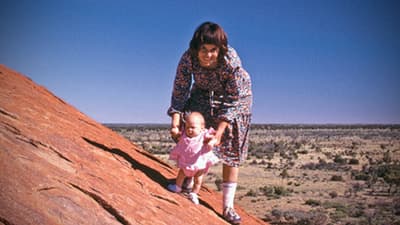
Azaria Chantel Loren Chamberlain was nine weeks old on 17 August 1980, when Lindy and Michael Chamberlain were camping with their children at Uluru, then widely called Ayers Rock, in Australia's Northern Territory.[1] Lindy said she saw a dingo leave the family tent and discovered Azaria missing. Her body was never found.[1]
The first official inquiry in Alice Springs accepted the parents' account and criticized the police investigation. Its findings were broadcast live on television, a first in Australia.[1] Then the case reversed direction. After further investigation and a second inquest in Darwin, Lindy was tried for murder.[1]
On 29 October 1982, Lindy Chamberlain was convicted and sentenced to life imprisonment. Michael Chamberlain was convicted as an accessory after the fact and received a suspended sentence.[1] The trial drew unusually intense media attention, and later criticism centered on sensational coverage, bias, and the professionalism of the proceedings.[1]
The words attached to the case traveled far beyond the courtroom. Around the world, people repeated some version of "A dingo ate my baby," although reports differ on Lindy's exact cry, including "the dingo's got my baby," "a dingo took my baby," and "my God, my God, a dingo has got my baby."[2] A cry from a campsite became a punchline, stripped loose from the death of a real child.
The Chamberlains kept appealing, but their challenges failed, including a final appeal to the High Court.[1] The break came only after the chance discovery of Azaria's jacket near a dingo den. The find supported the defense account, helped trigger new inquests, and led to Lindy's release after more than three years in prison.[1]
The legal record moved slowly after the public story had hardened. Both parents' convictions were eventually overturned, but the official finding did not arrive until 2012, thirty-two years after Azaria disappeared. Northern Territory Coroner Elizabeth Morris formally found that Azaria had been taken and killed by a dingo.[1]
At that fourth inquest, the court heard evidence of numerous dingo attacks on humans, including attacks on children. A lawyer assisting the coroner said the court had been told of 239 recorded dingo attacks in Queensland between 1990 and 2011, and argued that what may have seemed unlikely in 1980 should not be treated that way decades later.[4]
Outside the Darwin courthouse, Lindy Chamberlain said she hoped Australians would finally recognize dingoes as dangerous animals.[4] The finding also changed Azaria's official record. Before the final inquest, her death certificate still listed the cause of death as unknown.[4]
The compensation did not match the scale of the ordeal. The Chamberlains ultimately received about $1.3 million for wrongful imprisonment, reported as less than one-third of their legal costs.[1] What remained was a grim inventory: a baby missing from a tent, a slogan repeated for decades, and a small jacket found near a dingo's lair.