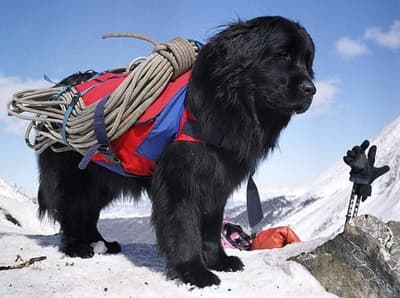
In the test that should have proved the dog’s purpose, the swimmer became the target. The Moscow Water Dog could enter cold water, carry a heavy coat through rough conditions, and move with the size the military wanted. But when it reached the sailor it was supposed to rescue, it tended to attack and bite instead.[3]
The Moscow Water Dog, also called the Moscow Diver or Moskovsky Vodolaz, was a Soviet-era rescue breed created for cold-water work. The program failed because the dogs were too aggressive with drowning victims, and the breed disappeared by the 1980s.
After World War II, the Soviet Union had a working-dog problem. Many dogs had been killed during the war, and imported animals were not enough to support the specialized military programs the state wanted.[2] At the Central Military School of Working Dogs, better known as the Red Star Kennels, breeders began developing new dogs for the armed services.[2]
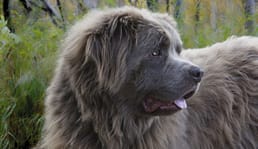
One experiment was meant for water rescue. The recipe began with the Newfoundland, a powerful water dog, then added tougher guard and shepherd stock. Accounts of the Moscow Water Dog describe it as derived from Newfoundlands, Caucasian Shepherd Dogs, and East European Shepherds.[1] RussianDog.net traces the effort to Newfoundland dogs brought from Germany to the Red Star kennel after the war, then crossed with Caucasian dogs and later Russian German Shepherds.[3]
The finished animal seemed to have the right body for the job. PetGuide describes the Moscow Water Dog as 26 to 30 inches tall and over 100 pounds, with a heavy double coat suited to rough weather and cold water.[1] RussianDog.net calls it an excellent swimmer, able to withstand freezing water and a cold climate.[3] It also traveled under several names: Moscow Water Dog, Moscow Diver, Moscow Retriever, Moskovsky Vodolaz, and Russian Newfoundland.[2][3]
The Trait That Ruined the Rescue
The Newfoundland side of the breeding plan made sense in the water. The Caucasian Shepherd side brought a harsher inheritance. RussianDog.net describes the Moscow Water Dog as having a much more aggressive temperament than the Newfoundland, a trait it links to the Caucasian Ovcharka, a guardian breed used to protect property and livestock but difficult to control.[3]
That temperament mattered at the only moment the breed could not afford a mistake. PetGuide summarizes the flaw plainly: the dog was more inclined to bite drowning victims than rescue them.[1] RussianDog.net gives the military version of the failure, saying the dogs tended to attack and bite sailors instead of saving them.[3] Wikipedia’s entry also notes that the breeding program was discontinued because the dogs would attack drowning victims rather than save them.[2]
For a guard dog, suspicion can be useful. For a water-rescue dog, it can make the assignment impossible. The animal had to swim toward a person in distress and allow contact. The Moscow Water Dog had the size, coat, and cold-water endurance, but not the reliable restraint the work required.
What Was Left Behind
The Russian Navy scrapped the breeding program, and PetGuide describes the breed as extinct by the 1980s.[1] RussianDog.net gives a slower ending: by the late 1960s, the future of the Moskovsky Vodolaz had passed to civilians, who mostly crossed the dogs back with purebred Newfoundlands. By the middle of the 1980s, the Russian Water Dog could no longer be distinguished from the Newfoundland and was considered extinct.[3]
The breed never became a recognized mainstream dog. Wikipedia lists it as extinct and not recognized by any major kennel club.[2] PetGuide says it was never bred in significant numbers and was never fully developed.[1] Its clearest legacy was indirect: both Wikipedia and RussianDog.net note that the Moscow Water Dog contributed to the development of the Black Russian Terrier.[2][3]
So the Moscow Water Dog survives mostly as a failed military idea with a very specific image attached to it: a huge black rescue dog, built for freezing water, reaching the sailor and choosing its teeth.