
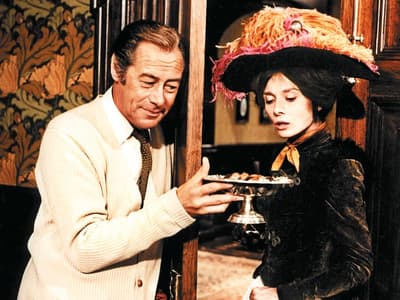
Sidney Poitier’s parents had gone to Miami from the Bahamas when the trip became something else entirely. Their son arrived on February 20, 1927, months early, in a city that was not supposed to be the center of the family story. As soon as he was strong enough, he was taken back to the Bahamas.[4]
Sidney Poitier was born unexpectedly in Miami while his Bahamian parents were visiting the United States, then grew up in the Bahamas before becoming the first Black actor to win the Academy Award for Best Actor and later serving as a Bahamian diplomat.
Evelyn Outen and Reginald James Poitier were Bahamian, and their son’s early world was not Florida but Cat Island, where the family lived on a farm.[3][4] That accident of birthplace gave Poitier a U.S. birth certificate, but his childhood belonged to the Bahamas, then a British Crown colony.[2]
On Cat Island, Poitier spent his first years on his father’s tomato farm.[4] Around age 10, after the farm failed, the family moved to Nassau.[4] The future Hollywood star’s path began far from studios, agents, and premieres, in a household where movement was often practical: from island to city, from one relative’s home to another, from work to whatever came next.
From Miami to a New York Stage
At 15, Poitier was sent to Miami to live with his brother.[3] At 16, he left for New York City, where he worked a string of low-paying jobs before theater became more than a distant possibility.[3][4] One of the bargains that changed his life was plain and physical: he worked as a janitor for the American Negro Theater in exchange for acting lessons.[4]
Before Poitier became known for composure on screen, he was cleaning a theater so he could learn how to stand on a stage. He later filled in for Harry Belafonte in Days of Our Youth, appeared in the Broadway production of Lysistrata in 1946, and toured with the all-Black production of Anna Lucasta.[4]
His film debut came in 1950 with No Way Out.[3][4] He followed it with Cry, the Beloved Country and broke through in Blackboard Jungle in 1955.[4] In 1958, The Defiant Ones brought him an Academy Award nomination.[3][4] In 1964, for Lilies of the Field, Poitier became the first Black actor and the first Bahamian to win the Academy Award for Best Actor.[2]
The Country That Raised Him
Poitier’s stardom carried unusual pressure because of the roles he refused as well as the ones he accepted. Britannica credits him with helping break the color barrier in the U.S. motion-picture industry and with redefining roles for African Americans by rejecting parts built on racial stereotypes.[1] His screen presence became famous not only for dignity, but for the terms under which that dignity was shown.
By the late 1960s, he was central to American film. His major movies included Guess Who’s Coming to Dinner, To Sir, With Love, and In the Heat of the Night.[3] He later directed films too, including Buck and the Preacher and Stir Crazy.[4] The career that began with odd jobs and a theater broom stretched across acting, directing, activism, and public service.
That public service returned the story to the Bahamas. Poitier served as an ambassador of the Bahamas from 1997 to 2007, and as the Bahamian ambassador to Japan from 2002 to 2007.[2] He was also listed as an ambassador to UNESCO.[2] The child whose Miami birth had been an accident of travel later formally represented the country that raised him.
Poitier died on January 6, 2022, at age 94.[2][3] His life can be compressed into firsts, awards, and official titles, but it begins more strangely than that: a premature baby in Miami, carried back across the water to the Bahamas, toward Cat Island, Nassau, and a future no one in that room could have cast.[4]