
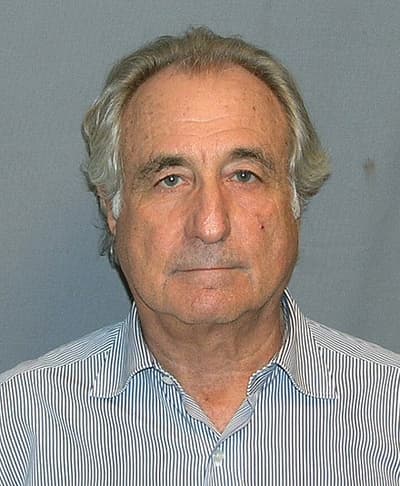
On December 9, 2008, Bernie Madoff told his family the business was finished. Two days later, after his sons alerted federal authorities, agents arrested the former Nasdaq chairman whose clients had believed their money was moving through a sophisticated Wall Street machine.[1][2]
Bernie Madoff’s fraud was enormous, but its basic operation was brutally simple: investor money went into a single Chase Manhattan bank account, and withdrawals were paid from later investors’ deposits rather than real trading profits.
Madoff did not look like an outsider trying to sneak into finance. He had founded Bernard L. Madoff Investment Securities in 1960, built a legitimate market-making business, and served as chairman of Nasdaq.[2][3] His Wall Street standing mattered. It made the promises easier to accept, and the doubts easier to dismiss.
Clients were told their money was being invested through a strategy known as split-strike conversion, a phrase sober enough for institutions and clever enough for wealthy families.[3] The returns appeared unusually steady, often described as roughly 10 to 15 percent, which helped make the accounts feel insulated from ordinary market trouble.[4]
Inside the advisory business, later accounts found something much plainer. Client funds were deposited into a single Chase Manhattan bank account. When investors wanted to withdraw money, Madoff paid them with money from newer investors. Trade confirmations and account statements showed gains, but the advisory business was not producing those gains through actual securities trading.[3]
The fraud hid beside credibility
A Ponzi scheme often sounds complicated after it collapses, because the wreckage is complicated. The investors are scattered. The paperwork is thick. The losses are argued over in different ways. In Madoff’s case, prosecutors used a figure of $64.8 billion based on the amounts shown in client accounts as of November 30, 2008.[2] Other summaries separate that paper total from direct investor losses, commonly placed above $17 billion or $18 billion.[3][4]
The FBI’s plain description of a Ponzi scheme fits the mechanism underneath those numbers. A scammer persuades people to invest for high returns, then uses new money to pay earlier investors, and sometimes personal expenses, rather than using the funds as promised.[1] In Madoff’s offices, nearly 15 FBI special agents, along with analysts and law enforcement partners, worked to unwind what the bureau called history’s biggest financial crime.[1]
Madoff’s legitimate past gave the fraud its cover. The FBI says he began as a real market maker, matching buyers with stocks, before opening an investment advisory business.[1] Market Histories describes his firm as an early adopter of electronic trading, influential enough that regulators consulted him on market structure policy.[3] The scheme did not need a shabby storefront. It sat next to a business that had already earned respect.
There were warnings. Financial investigator Harry Markopolos repeatedly raised concerns with the Securities and Exchange Commission, according to later accounts, but the operation continued until the financial crisis made investors ask for their money back in numbers the scheme could not absorb.[4] Confidence could keep the account moving. Withdrawals exposed what the statements had concealed.
In March 2009, Madoff pleaded guilty to 11 federal crimes. In June, he was sentenced to 150 years in prison, the maximum sentence.[2] The public memory of the case is a colossal dollar figure, but the working image is smaller and colder: deposits arriving, withdrawals leaving, and one bank account carrying a fiction until the money stopped coming in.