There are murders in Psycho. There is stolen money. There is voyeurism, taxidermy, and one of the most famous screams in movie history. And yet one of the details that genuinely worried censors was a toilet.[1]
Not the bathroom itself. Not the implication of sex. Not even the violence people now most associate with the film. The problem was that Alfred Hitchcock showed a toilet flushing on screen, with torn-up note paper visibly swirling away. In mainstream American film and television, that simply was not done.[1]
That sounds faintly ridiculous until you remember what censorship is usually about. It is not just about obscenity. It is about boundaries. And in 1960, one of the boundaries American screens still tried to preserve was the fiction that bodies could be threatened, stalked, undressed, and murdered, but never shown doing anything as ordinary and physical as using plumbing.
The Most Scandalous Thing In The Bathroom
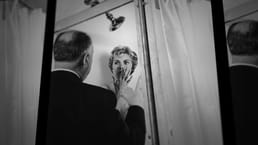
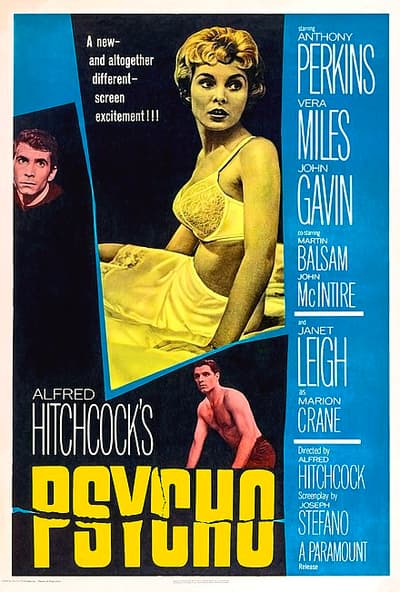
Psycho arrived as a rupture. Hitchcock shot it in black and white on a relatively low budget, using crew members from his television series, and made a film that felt harsher, stranger, and more intimate than the polished suspense pictures audiences expected from him.[1] The story begins with Marion Crane, played by Janet Leigh, stealing money and fleeing town, only to stop at the Bates Motel, where she encounters Norman Bates, the shy young proprietor whose inner life is far more dangerous than it first appears.[1]
But before Psycho becomes the film everyone remembers, it is a film about little acts of concealment. A folded newspaper. An envelope of stolen cash. A woman thinking furiously in a room by herself. That is where the toilet enters the story.
Marion tears up a note and flushes the pieces away.[1] It is a tiny action. Plot-wise, almost nothing. Symbolically, everything. She is trying to erase a trace of herself. And Hitchcock, with his almost mischievous instinct for exactly where social nerves were hidden, insists on showing the whole act. The toilet is visible. The paper is visible. The flush is visible.[1]
It was, according to accounts surrounding the film, the first time a flushing toilet had appeared in mainstream American film and television.[1] Think about that for a second. Hollywood had spent decades inventing dream worlds, gangster worlds, western towns, drawing rooms, bedrooms, and crime scenes, yet one of the most ordinary fixtures of modern life remained effectively off-limits.
Why A Flush Mattered
The reason this detail mattered is that old screen taboos were rarely logical. They were atmospheric. They governed tone, implication, and what sort of reality audiences were allowed to acknowledge. Toilets belonged to the category of things everyone knew existed and no respectable movie admitted existed.
This made Hitchcock’s choice more than a prank. It was part of Psycho’s larger strategy. The film keeps dragging the viewer into spaces that American movies had previously kept neat and sealed. A cheap motel room. An anxious woman’s private calculations. A bathroom that behaves like an actual bathroom.
That realism matters because Psycho depends on the collapse of distance. Earlier Hollywood thrillers often maintained a kind of elegance, even when dealing with danger. Psycho gets closer. Closer to sweat, closer to guilt, closer to money hidden in plain sight, closer to a body in a shower, closer even to the torn paper spinning in a toilet bowl. It is a film that keeps insisting the sordid details count.[1]
The Film That Kept Crossing Lines
The toilet is only one example of how aggressively Psycho pushed against what mainstream American cinema considered acceptable. Hitchcock marketed the film with unusual secrecy, refused late admissions once screenings had started, and built an atmosphere in which the audience was not just watching a thriller but being managed, manipulated, and ambushed by it.[1]
And the movie rewarded that strategy by violating one expectation after another. Its apparent protagonist disappears shockingly early. Its violence is fragmented rather than explicit, but feels more brutal because of that fragmentation. Its sexuality is not graphic, but it is unmistakably present. Its central house looms over the motel like a mind that has not been cleaned in years.[1]
In that context, the flushing toilet fits perfectly. It is another small but decisive message from Hitchcock: this film is not going to preserve your comfort by obeying the old rules of tasteful omission.
A New Kind Of American Horror
Part of what made Psycho so shocking in 1960 was not just the famous shower scene. It was the cumulative feeling that the movie had brought horror indoors. Not into castles or laboratories or exotic Gothic landscapes, but into the spaces of modern American life: motel offices, roadside rooms, bathrooms, ordinary conversations.[1]
The toilet belongs to that shift. It is a banal object, almost aggressively uncinematic, which is precisely why it works. Once a film is willing to include the banal, the whole world of the story becomes less stylized and more dangerous. A person can die in a real bathroom, in a real place, after doing something as mundane as tearing up a note and flushing it away.
This is one of Hitchcock’s great tricks in Psycho. He does not merely show horror. He lowers it into the everyday until the everyday itself starts to feel contaminated.
The Censors Saw The Crack In The Wall
Censors understood, even if only instinctively, that such details could matter. A flushing toilet may seem trivial beside murder, but it signaled a broader erosion of old screen decorum. If a filmmaker could show that, what else might follow? What other once-unshowable things might suddenly become visible?
And of course, that is exactly what happened. Psycho became one of the great turning points in American film, a sensational success that helped redefine horror and loosen the old grammar of what studio-era movies were allowed to present.[1] It was acclaimed, controversial, profitable, and enormously influential.[1]
So the toilet was not the most important thing in Psycho. But it was the kind of detail that reveals why the film mattered. It marks the point where Hitchcock stopped treating the screen as a polished surface and started using it as a place where mess, anxiety, bodily reality, and social taboo could all appear at once.
The Flush That Announced A Change
There is something almost perfect about the fact that this boundary-breaking moment involved torn-up paper disappearing down a drain. A woman tries to erase evidence. A director quietly erases a convention. The audience watches both things happen in the same shot.
That is why the moment still lingers. Not because a toilet is inherently dramatic, but because in 1960 it was a tiny act of cinematic rebellion hidden inside a much larger one. Psycho did not just terrify audiences. It changed what a mainstream American movie could show them.[1]
And one of the first signs of that change was a flush.