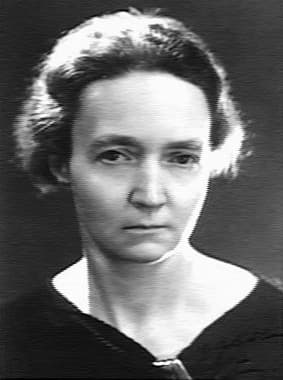
There are scientific dynasties, and then there is the Curie family, which feels less like a dynasty than a controlled chain reaction. First came Pierre and Marie Curie, turning invisible radiation into one of the great discoveries of modern science. Then, about three decades later, their daughter Irène Joliot-Curie and her husband Frédéric did something almost unnerving in its elegance: they found a way to make radioactivity on demand.[1]
That was the breakthrough. Not merely finding radioactive substances in nature, as her parents had done, but creating radioactive isotopes artificially. It was the difference between discovering a river and learning how to turn on the tap. In 1935, that discovery won Irène and Frédéric the Nobel Prize in Chemistry, making them the second married couple in history, after her parents, to win a Nobel together.[1]
The Child of the Radium Age
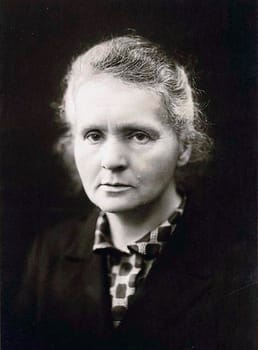
Irène was born in Paris in 1897, into a household where science was not just an occupation but the atmosphere itself. Her mother was Marie Curie. Her father was Pierre Curie. Her childhood was shaped by brilliance, discipline, loss, and the strange new world radioactivity had opened. Pierre died when Irène was still a child, killed in a street accident in 1906, and Marie responded the way she responded to nearly everything: by working, teaching, and pressing forward.[1]
Irène's education was unconventional even by gifted-child standards. Marie helped organize a private collective of elite scholars, known as “The Cooperative,” where children of prominent academics were taught in one another's homes. Science mattered, of course, but so did sculpture, language, and independent thought. This was not just schooling. It was an attempt to raise a mind equal to the century that was coming.[1]
War, X-Rays, and a Familiar Kind of Danger
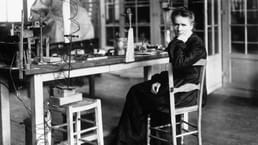
Then World War I arrived, and Irène, still young, was pulled into the practical side of science. She trained as a nurse radiographer and worked alongside Marie Curie using X-ray equipment near the front. She helped doctors locate shrapnel inside soldiers' bodies and learned how to operate and repair the machines herself. Radiation, at that point, still carried the aura of a miracle. It could see through flesh. It could guide surgeons. It could save lives.[1]
It could also quietly destroy the people using it. That part was not yet fully understood, or at least not fully respected. The Curie family, like many pioneers of the age, worked with radioactive materials before modern protections existed. The danger was in the room with them all along.[1]
The Discovery That Changed the Family Story
After the war, Irène returned to her studies, completed degrees in mathematics and physics, and began working at the Radium Institute, the scientific world her parents had built. In 1924, as she neared the end of her doctorate, she was asked to train a young chemical engineer in the precise laboratory methods of radiochemistry. His name was Frédéric Joliot. She would later marry him.[1]
Together, they turned to the atom's nucleus. In the early 1930s, they came close to major discoveries, detecting effects tied to the positron and the neutron before fully grasping what they had in hand. That is one of science's cruel little habits: being early does not count if you do not also see clearly.[1]
But in 1934, they saw clearly enough. By bombarding stable elements with alpha particles, they produced new radioactive isotopes that did not occur naturally, including radioactive phosphorus from aluminium. This was artificial radioactivity, also called induced radioactivity, and it mattered for more than prestige. Suddenly, radioactive materials could be produced more quickly, more cheaply, and in far greater quantities than before. That made them far more useful for research and medicine.[1]
It also completed a kind of generational arc. Marie and Pierre Curie had isolated naturally radioactive elements. Irène and Frédéric showed that radioactivity was not just something nature hid in rare substances. Under the right conditions, it could be manufactured.[1]
A Nobel Prize, and the Price Beneath It
The 1935 Nobel Prize in Chemistry confirmed what the scientific world already understood: Irène Joliot-Curie was not merely “Marie Curie's daughter.” She was one of the central nuclear scientists of her time.[1] She later served in government, helped support the founding of major French research institutions, and after World War II became one of the commissioners of France's new Atomic Energy Commission. In 1948, she and Frédéric were among the scientists behind Zoé, France's first nuclear reactor.[1]
But the family triumph carried an old shadow. Years of radiation exposure accumulated. In 1946, a sealed capsule of polonium exploded on her laboratory bench, exposing her directly.[1] She had already spent decades around X-rays, polonium, radium, and the everyday hazards of early nuclear science. Eventually she developed leukemia. She died in Paris in 1956, at age 58, from illness linked to exposure to polonium and X-rays.[1]
The symmetry is hard to ignore. Marie Curie died from aplastic anemia linked to prolonged radiation exposure. Irène died from radiation-linked leukemia. In both generations, the same force that brought fame, discovery, and Nobel recognition also exacted a biological price. The Curie story is one of brilliance, yes, but also of a new science being learned the hard way, through bodies as much as through instruments.[1]
The Family Did Not End There
And then, somehow, the story keeps going. Irène and Frédéric's children, Hélène Langevin-Joliot and Pierre Joliot, both became scientists too.[1] Not celebrity heirs trading on a surname, but working researchers. Hélène became a nuclear physicist. Pierre became a biochemist. Both have had prominent scientific careers, and both are still alive, which makes the Curie-Joliot line feel less like history than a current still running through modern science.[1]
That may be the strangest part of all. Irène Joliot-Curie was born into one scientific revolution, helped create another, died from the hidden cost of both, and still left behind a family in which the work continued. The Curies did not just win Nobel Prizes. They changed what science could do, and then paid, generation after generation, for how close they stood to the thing they were trying to understand.[1]