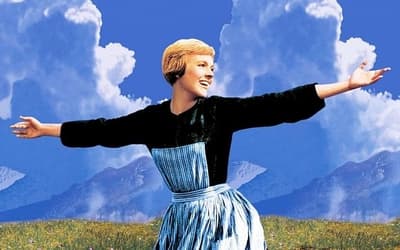
Maria Augusta Kutschera was born on 26 January 1905 and died on 28 March 1987 [1]. In 1924 she entered Nonnberg Abbey in Salzburg as a postulant [1]. Two years later the abbey asked her to leave temporarily to teach Maria Franziska von Trapp, one of seven children born to the widowed naval commander Georg von Trapp [1]. She eventually looked after the other children: Rupert, Agathe, Werner, Hedwig, Johanna, and Martina [1].
Georg von Trapp was born on 4 April 1880 and became the most successful Austro-Hungarian submarine commander of World War I, sinking 11 Allied merchant ships totaling 47,653 GRT and two Allied warships displacing 12,641 tons [2]. His first wife, Agathe Whitehead, died of scarlet fever in 1922 and left seven children [1][2]. Georg hired Maria Augusta Kutschera to tutor one of his daughters and married her at Nonnberg Abbey on 26 November 1927 [1][2]. He was 25 years her senior, and they had three children together: Rosmarie, Eleonore, and Johannes [1].
The family lost most of its wealth in the Great Depression and turned to singing as a way to earn a living [2]. Agathe von Trapp, Georg's eldest daughter, was born on 12 March 1913 in Pola and sang first soprano with her sister Johanna [4]. After winning a folk singers competition at the 1936 Salzburg Festival, the von Trapps sang a half-hour radio program and performed before Austria's chancellor, Kurt von Schuschnigg [4]. In 1937 they toured Europe as the Salzburg Chamber Choir Trapp [4].
On 11 March 1938 Austria was invaded by Germany [4]. Georg von Trapp declined a commission in the German Navy after the Anschluss [2]. The family refused a request to sing at Adolf Hitler's birthday party, and Agathe's older brother Rupert, a doctor, declined an offer to work in Nazi hospitals [4]. They left Austria for Italy and then traveled to the United States via London; Agathe arrived in the U.S. in October 1938 [4]. After their visas expired, the family returned to Europe, and Agathe arrived back in the U.S. in October 1939, where she and her family were detained on Ellis Island for several days [4].
Maria von Trapp's memoir The Story of the Trapp Family Singers was published in 1949 by J. B. Lippincott Company of Philadelphia [3]. A friend had persistently asked her to write her life story, and an hour of scribbling became the basis for the first chapter [3]. The book was a best-seller, and a German edition appeared in 1952 under the title Die Trapp-Familie: Vom Kloster zum Welterfolg [3]. The memoir inspired the 1956 West German film The Trapp Family, which in turn inspired the 1959 Broadway musical and the 1965 film version of The Sound of Music [1][2][3].
Maria von Trapp's 1949 memoir records several differences from the musicals [3]. Maria married Georg von Trapp in 1927, not 1938, and she initially fell in love with the children before she came to love him [3]. Georg was a warm, gentle-hearted parent rather than the aloof patriarch who disapproved of music [3]. The family left Austria openly by train instead of secretly at night, and they first performed at the Salzburg Festival in 1936, not 1938 [3]. By the time the family left Austria in 1938, two more children had been born and a third was on the way [3].
The Sound of Music was produced and directed by Robert Wise from a screenplay by Ernest Lehman and stars Julie Andrews and Christopher Plummer [5]. 20th Century-Fox released it in the United States on 2 March 1965, first as a limited roadshow theatrical release [5]. It became the highest-grossing film of 1965 and, by November 1966, the highest-grossing film in history, surpassing Gone with the Wind; it held that distinction for five years [5]. The film sold 283 million admissions worldwide and earned a total worldwide gross of $286 million [5]. It received five Academy Awards, including Best Picture and Best Director [5]. In 2001 the Library of Congress selected it for preservation in the National Film Registry [5].