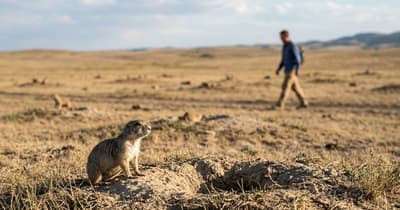
Con Slobodchikoff asked people to walk past prairie dog burrows as if the little animals were the ones taking notes. One visitor might wear blue. Another might be shaped differently. Dogs and simple colored cutouts also crossed the colony's line of sight. Each time, the prairie dogs opened their mouths and sent warnings through the grass.
Inside prairie dog alarm calls, researchers found more than a general cry of danger. Studies of Gunnison's prairie dogs found calls that vary with the kind of intruder and can encode features such as size, shape, speed, and color.
Near Northern Arizona University, Slobodchikoff spent years listening to Gunnison's prairie dogs and hearing differences that were too consistent to dismiss. A hawk did not seem to trigger the same call as a coyote. A dog sounded different from a human. Even individual coyotes appeared to leave slightly different traces in the colony's alarms.[1]
In the field tests, humans became moving vocabulary cards. Researchers put dogs within sight of the animals, sent people through the area, and showed them shapes of different sizes and colors. The recordings were then analyzed for acoustic patterns, the tiny differences that a casual walker would hear as one continuous squeak.[1]
CBC described one of the stranger claims in ordinary language: the calls can include details about a person nearby, including clothing color, size, and whether the person carried a gun.[2] The academic paper behind the work was blunt about the project too. It was about decoding information inside Gunnison prairie dog alarm calls.[3]
At a burrow mouth, an upright prairie dog may be doing more than panicking. It may be sorting the shape of the threat, then passing that sorting on before the danger arrives. A tall person in blue is not quite the same fact as a shorter person in another color. To the colony, those differences can matter.
Slobodchikoff arrived with recorders, questions, and analysis software. The animals, meanwhile, may have been cataloging him back. His clothes, body, and direction of travel became part of their message.
At the edge of the colony, the experiment leaves a small, memorable reversal. Humans thought they were listening to animal noise. The prairie dogs may have been watching the humans just as closely, turning a person crossing the grass into a warning specific enough for the neighbors to act on.
Sources