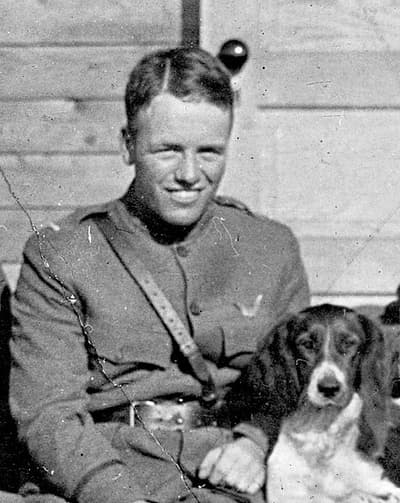
Quentin Roosevelt once helped turn the White House into a boys' fort. He and his friends held meetings in the attic, raced through corridors, carved a baseball diamond into the lawn without permission, and were tried by Theodore Roosevelt himself after spitballs landed on Andrew Jackson's portrait.[2]
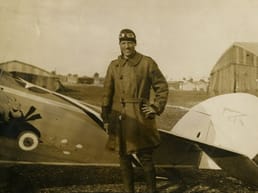
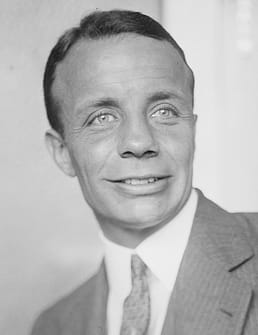
Quentin Roosevelt I, Theodore Roosevelt's youngest son, became a World War I pursuit pilot and was killed in aerial combat in France on July 14, 1918. He is the only child of a U.S. president known to have been killed in action.
The boys called themselves the White House Gang, and Quentin was at the center of it. Archie Roosevelt, Charlie Taft, Earle Looker, Richard Chew, and other Washington boys used the Executive Mansion for raids, games, and secret councils, while the president accepted the title of honorary member.[2]
In one attic game, Theodore Roosevelt romped after the boys while growling ferociously. Earle Looker turned off the lights, and the president slammed his head into a wooden beam. When the lights came back on, Roosevelt saw that he had nearly struck a protruding nail. His rule afterward was practical: never switch off the lights when someone was close to a post.[2]
The gang explored the mansion from attic to basement and staged famous battles with real swords and revolvers or water pistols, depending on the day.[2] Other accounts describe Roosevelt children roller skating in White House hallways, sledding down back stairs on kitchen trays, and turning nearby government offices into targets for mock attacks.[4]
From the White House Attic to France
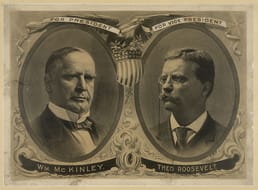
Quentin was born in Washington, D.C., on November 19, 1897, the youngest child of Theodore and Edith Roosevelt.[1] When William McKinley was assassinated in 1901, Theodore Roosevelt became president, and Quentin moved into the White House as a small child in a famously noisy family.[5]
By the time Europe was at war, Quentin was a Harvard student. He had fallen in love with Flora Payne Whitney, granddaughter of Cornelius Vanderbilt, and wrote impatiently about the United States watching while England and France fought.[5] His father's public faith in duty had become a private test for the youngest Roosevelt son.
Quentin joined the United States Army Air Service in 1917 and served as a second lieutenant in the 95th Aero Squadron.[1] In France, he became a pursuit pilot and shot down one German aircraft.[1] One of his last letters home described the grim excitement of war after his squadron had lost a man; three days after Theodore and Edith Roosevelt read it, Quentin was dead.[5]
On July 14, 1918, Bastille Day, Quentin Roosevelt was killed in aerial combat near Chamery, close to Coulonges-en-Tardenois, France. He was 20 years old.[1] The official fact is spare, but it carries an unusual weight: the son of a president, raised amid the most public rooms in America, died as a young officer in the skies over France.
The President's Son Who Did Not Come Home
Quentin received the Croix de Guerre with palm, the Purple Heart, and the Victory Medal.[1] His remains now rest at the Normandy American Cemetery and Memorial in Colleville-sur-Mer, on land administered by the United States.[1]
The record attached to his name is singular. Quentin Roosevelt is the only child of a U.S. president to have been killed in action.[1] Behind that line is the boy who once filled the White House attic with conspirators, then climbed into a pilot's cockpit in France and did not return from the sky.