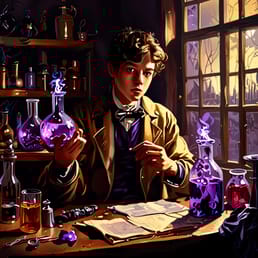

Victorian beauty culture had a taste for danger, literally. In Europe and the United States, some women swallowed arsenic in pursuit of the pale, delicate complexion that signaled wealth, fragility, and social rank.[1][2]
By the second half of the 19th century, arsenic was being sold not just as a poison but as a beauty aid. Advertisers pushed arsenical soaps, washes, pills, liquids, and complexion wafers that promised to clear freckles, blackheads, and pimples while giving the skin a softer, whiter glow.[2] One of the best known examples, Dr. James P. Campbell's arsenic complexion wafers, remained on the market well into the 20th century.[1][2]
The craze did not come from nowhere. In the 1850s, reports spread through the English-speaking world about so-called arsenic eaters in Styria and Lower Austria, people said to take small doses of arsenic to look plumper, rosier, and more attractive.[2] Some doctors doubted parts of those stories, but the rumor itself was enough. Once arsenic became linked to blooming complexions, the beauty trade did what it always does and turned the fantasy into products.[2]
The appeal made social sense in its own grim way. Pale skin suggested you did not work outdoors, and in some fashionable circles even the wasted look associated with tuberculosis was romanticized as elegant.[1] Arsenic seemed to promise something makeup could not, not painted beauty, but beauty that looked natural, delicate, and expensive.[1][2]
What makes the story so bleak is that arsenic was not an innocent remedy later discovered to be harmful. It was already notorious as a poison.[2][4] Modern toxicology only makes that clearer. Inorganic arsenic is readily absorbed through the gastrointestinal tract and can cause severe gastrointestinal, cardiovascular, and neurologic harm.[3] Victorian customers were not trusting a harmless tonic. They were gambling that a famous poison, taken in small enough doses, could pass for skincare.[2][3]
There was also a more familiar layer beneath the chemistry. As Cosmetics and Skin notes, some arsenical products may have contained only trace amounts, or amounts too low to make much cosmetic difference at all.[2] The idea still sold. Consumers were buying a promise as much as a treatment, the promise that beauty could be purchased, bottled, and made to look effortless.
That is why the fact still lands today. The formulas change and the branding gets cleaner, but the pressure underneath it is recognizably modern. When a culture treats appearance as proof of worth, people will risk astonishing things to look like they belong.[1][2]