On the night after Shiloh, men who could not crawl out of the Tennessee mud watched their own wounds give off a faint blue-green light. Rain had soaked the fields. The wounded had lain for hours, some through the night, waiting for stretcher bearers, surgeons, or death.[1][3]
Angel’s Glow refers to reports that some Civil War soldiers’ wounds glowed after the Battle of Shiloh and then healed unusually well. In 2001, two high school students proposed that the cause was the bioluminescent bacterium Photorhabdus luminescens, carried by tiny soil worms.
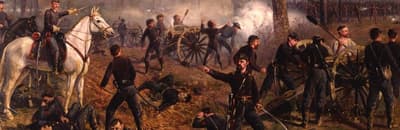
Shiloh began on April 6, 1862, near a small Methodist meeting house in southwestern Tennessee, when Confederate forces struck Union camps that had built no defensive works.[1] The place name is often translated as “place of peace,” a bitter fit for two days that produced roughly 20,000 to 24,000 casualties, depending on the accounting used.[2][3][4]
By the end, thousands of wounded soldiers lay across woods, ravines, and muddy ground near the Tennessee River.[3] Medical help did not reach everyone quickly. The Angel’s Glow story says that some men noticed their wounds shining in the dark, and that doctors later found those men seemed more likely to survive and recover faster than soldiers whose wounds did not glow.[2][4]
That battlefield detail is difficult to pin down. Timothy B. Smith, a historian and former ranger at Shiloh National Military Park, told Snopes that before a 2001 U.S. agriculture report, he had not heard of a long-held Shiloh tradition about glowing wounds.[4] The legend survives with a caution label attached, but the explanation proposed in 2001 is specific enough to make the old story stranger.
The High School Science Project
In 2001, seventeen-year-old Bill Martin visited the Shiloh battlefield and heard the Angel’s Glow story.[3][5] His mother, Phyllis, was a microbiologist who studied glowing bacteria, and Martin wondered whether a living organism, rather than a miracle, could have made the light.[4][5]
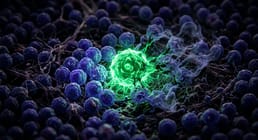
Martin worked with fellow student Jon Curtis, and the pair entered their research in the Intel International Science and Engineering Fair.[4] Their candidate was Photorhabdus luminescens, a bacterium that produces light and lives in partnership with microscopic nematode worms in soil.[2][3]
The life cycle is gruesome in miniature. Nematodes carry P. luminescens inside them, then invade insect larvae. The bacteria help kill the insect host and suppress competing microbes, creating a protected meal for the worms.[3][5] In a wound, that antimicrobial effect may have mattered. The bacteria’s chemical defenses could have killed or slowed more dangerous organisms that would otherwise have caused deadly infection.[2][5]
One problem remained. Human bodies are usually too warm for P. luminescens to thrive.[2] Shiloh supplied a possible answer in the worst way. Soldiers lay immobilized in cold rain and mud, their body temperatures dropping as they waited outside through the night.[2][3] Under those chilled conditions, the bacteria may have survived long enough to glow and to affect the microbial battle inside the wound.[2]
Angel’s Glow, in that version, was not a halo but an accident of weather, soil, insects, bacteria, and delayed rescue. A soldier had to be wounded, contaminated, chilled, and alive long enough for help to come. In the darkness after one of the Civil War’s first great shocks, the sign of that unlikely chemistry may have been a wound shining faintly from the mud.
Sources
- Military Times, “Angel’s Glow: The glowing bacteria that saved soldier lives at Shiloh”
- ScienceABC, “Angel’s Glow: What Made These Civil War Wounds Glow?”
- Popular Mechanics, “Civil War Soldiers’ Wounds Started Glowing, And Saved Their Lives”
- Snopes, “Some Civil War Soldiers’ Wounds Glowed in the Dark?”
- All That’s Interesting, “Angel’s Glow and the Mystery of the Civil War’s Glow-in-the-Dark Wounds”