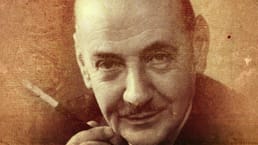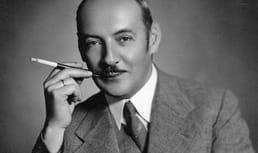
Charles Lindbergh sat at the controls of German bombers before most Americans had decided what Hitler's Germany meant to them. Invited to inspect the Luftwaffe, he toured factories, counted new airfields, watched a nation building itself around military aviation, and came away impressed by what he called Germany's "organized vitality."[1]
Charles Lindbergh was not only the pilot who made the first solo nonstop flight from New York to Paris. Before World War II, he praised Nazi Germany's air power, accepted a medal from Hermann Göring, and became the America First Committee's most famous isolationist voice.
In 1927, the picture had looked simpler. Lindbergh was 25 when he flew the Spirit of St. Louis from New York to Paris, a feat that made him an international hero almost overnight.[3] Newspapers celebrated him, crowds pursued him, and the country turned the young aviator into a symbol of nerve, machinery, and modern American possibility.
The public gaze later became unbearable. In 1932, Lindbergh's 20-month-old son was kidnapped from the family's New Jersey home. The search, the discovery of the child's body, and the trial that followed became a national spectacle, intensified by Lindbergh's fame.[3] By 1935, after years of press attention and intrusion, Charles and Anne Morrow Lindbergh left the United States. Lindbergh told a friend, "We Americans are a primitive people," adding that Americans had little respect for law or the rights of others.[1]
The Hero Abroad
In the English countryside, and later on a small island off the northwest coast of France, Lindbergh found privacy and a new circle of influence.[1] He worked closely with Dr. Alexis Carrel, a Nobel Prize-winning French scientist known for pioneering surgical techniques involving blood vessels and organ transplantation.[1] Lindbergh, who had a gift for mechanical invention, collaborated with Carrel on research connected to keeping organs alive outside the body. The two published The Culture of Organs in 1938.[1]
Carrel's scientific reputation came with disturbing views. In a 1935 interview, he said, "There is no escaping the fact that men were definitely not created equal," and he favored eliminating criminals, the insane, and others he believed weakened civilization.[1] Lindbergh admired him, calling Carrel's mind "the most stimulating" he had ever met.[1]
Germany entered Lindbergh's life through aviation. In 1936, the American military attaché in Berlin asked him to report on German air power. Charles and Anne attended the Summer Olympics as guests of Hermann Göring, head of the Luftwaffe.[1] Lindbergh toured aircraft factories, took the controls of advanced bombers, and returned to Germany twice during the next two years.[1]
What he saw convinced him that no European power could stand against Germany in a war.[1] To some observers, that sounded like a pilot's cold assessment of aircraft, factories, and runways. To others, as Nazi aggression mounted, it sounded uncomfortably close to admiration.
America First
The medal made the association harder to explain away. Lindbergh accepted an award from Göring on behalf of Adolf Hitler, a public honor from the regime whose air force he had been studying.[2] As Europe moved toward war, he argued that the United States should stay out.
At home, Lindbergh became closely tied to the America First Committee, the isolationist organization that opposed American entry into World War II. All That's Interesting describes him as the group's de facto spokesperson as Hitler's ambitions became harder to ignore.[2] At America First rallies, he spoke to large crowds and warned against intervention.[2]
His politics went beyond caution about another war. Accounts of his prewar views describe him campaigning to "protect the white race," and his public statements brought accusations of antisemitism and Nazi sympathy.[2] Biography.com summarizes the damage plainly: before Pearl Harbor, Lindbergh became a target for his Nazi ties and isolationist, anti-Semitic views, though he later contributed to the American war effort after the United States entered World War II.[3]
Lindbergh's reputation never settled back into the clean shape of the old aviation photographs. The pilot who crossed the Atlantic alone also stood before American crowds while Nazi Germany expanded across Europe, using a hero's authority to tell the country to remain outside the war.