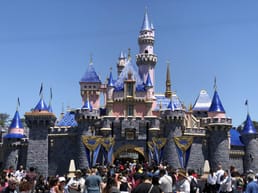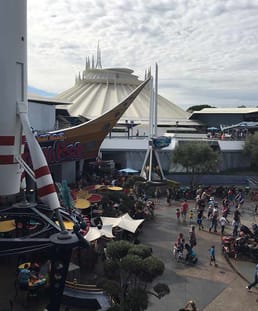
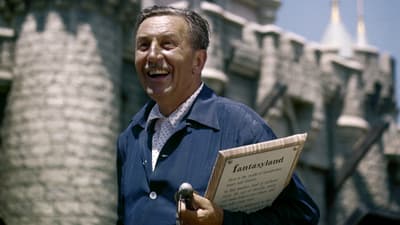
Outside the brand-new gates in Anaheim, someone saw a business opportunity in a fence. Disneyland was supposed to open on July 17, 1955, to an invitation-only crowd. Instead, counterfeit tickets multiplied, the entrances jammed, and one enterprising man reportedly set up a ladder and charged $5 a head to climb over.[1]
Disneyland’s opening day expected about 15,000 invited guests, but 28,154 people got inside, many with counterfeit tickets. The crush helped create a seven-mile backup on the Santa Ana Freeway and turned Walt Disney’s grand unveiling into what some employees remembered as “Black Sunday.”
Nearly half of the United States was watching on black-and-white television as the park made its national debut.[1] On-screen, the broadcast introduced Walt Disney’s new world as a carefully staged piece of American optimism. In Anaheim, a 160-acre orange grove had just been turned into a $17 million theme park after a frantic year of construction.[1]
The idea had not sounded inevitable when Disney began selling it. In the 1950s, an amusement park still carried the smell of the midway. Skeptics heard “Disneyland” and imagined another dirty carnival, not a new kind of family place.[2] Bankers were doubtful, and Roy Disney, Walt’s brother and the studio’s financial director, worried the project could lead to ruin.[1]
Walt had made the bet personal. He borrowed against his life insurance and sold vacation property to help finance the park.[1] Hollywood had a sharp little phrase for the gamble: “Walt’s folly.”[1] The insult worked because the plan sat between categories. It was not a movie, not a playground, not a county fair, not quite an amusement park as people knew the term.
The older image behind it was quieter. Disney later described taking his daughters on Saturday outings to the Griffith Park Carousel, where he sat on a bench eating peanuts while they rode. He began thinking there should be a place where parents and children could have fun together.[5] Early plans for a smaller Mickey Mouse Park near the Disney studio in Burbank included a castle, a railroad, stagecoaches, Skull Rock from “Peter Pan,” and a Monstro attraction from “Pinocchio,” ideas that later found their way into Disneyland.[5]
By opening day, that family fantasy had to pass through turnstiles. The invitation list was meant to keep the crowd manageable. Counterfeit tickets broke the system. Instead of the expected 15,000 invited guests, 28,154 people entered the park.[1] Others bypassed the gates entirely, using the paid ladder route over the fence.[1]
Traffic outside told the same story in a less magical language. Cars backed up for seven miles on the Santa Ana Freeway.[1] Inside, Disney’s national television celebration was unfolding while employees coped with a park that had barely been finished in time and a crowd far larger than planned.[1]
The counterfeit tickets were more than an opening-day mishap. They showed that demand had already escaped the neat boundaries Disney tried to draw around his unveiling. Before Disneyland became an institution, it was a place people were willing to fake their way into.
The dream began with a father on a bench, eating peanuts while a carousel turned. On opening day, it appeared in messier form: a ticket in someone’s hand, a ladder against a fence, and a line of cars stretching for miles toward Anaheim.