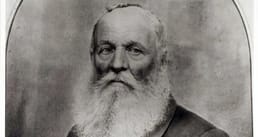
In Père Lachaise Cemetery, where visitors drift from one famous name to the next, Antoine-Augustin Parmentier’s grave can announce itself before the inscription does. On and around the tomb are potatoes, actual tubers, left like offerings for a man whose great public cause was convincing France to eat them.[1]
Antoine-Augustin Parmentier was a French army pharmacist who survived Prussian captivity during the Seven Years’ War while eating potatoes, then spent decades persuading France that the despised tuber was safe, nourishing, and useful against famine.
Parmentier was born in 1737 in Montdidier, in northern France, and trained as a pharmacist before serving with the French army.[2] During the Seven Years’ War, Prussian forces captured him, and prison gave him a lesson French society had mostly refused to learn. His captors fed him potatoes, a food many French people associated with pigs, poverty, poison, and even leprosy.[2]
In France, that fear had the force of law. Potato cultivation had been banned in 1748, partly on the belief that the crop caused leprosy, and the ban remained in place until 1772.[2] The potato had reached Europe from South America through Spanish contact, but outside places such as Spain and Ireland, it was often treated as animal feed rather than a proper human staple.[2]
Prison should have made Parmentier share the disgust. Instead, it gave him evidence. One account says he was fed little but boiled potato mash, sometimes as his only food for more than two weeks at a time.[4] He survived, returned to Paris in 1763, and came home convinced that the scorned root might help with one of France’s recurring terrors, hunger.[2]
The Publicity Campaign of a Potato Believer
After Paris, Parmentier studied nutrition and turned the potato into a career-long argument.[2] In 1772, the Paris Faculty of Medicine declared potatoes edible after he won an academy contest with an essay on their value as food in times of need.[3] Legal permission, though, did not immediately make dinner appetizing.
So Parmentier made the potato visible in places where suspicion might soften into curiosity. He became known for publicity stunts that treated the plant as desirable, not merely tolerable.[2] One famous story has him offering potato flowers to Louis XVI and Marie Antoinette, turning a crop associated with livestock into something a queen could wear.[6]
At his table, potatoes became part of performance. Parmentier served potato dishes at dinners for influential guests, including Benjamin Franklin, using hospitality as a form of agricultural persuasion.[6] The point did not require a lecture. If important people could eat potatoes in polite company, the tuber was no longer only pig feed.
His public work reached beyond potatoes. Parmentier is also remembered for helping establish France’s first mandatory smallpox vaccination campaign under Napoleon, for work on sugar from sugar beets, for founding a breadmaking school, and for studying food preservation, including refrigeration.[2] Still, the potato stayed closest to his name. In French cooking, “Parmentier” remains attached to potato dishes, including soups and baked preparations.[5]
A Grave With Tubers
Parmentier died in Paris in 1813 and was buried in Père Lachaise Cemetery.[2] The memorial there is not only stone and lettering. Atlas Obscura describes the grave as surrounded by potato plants, with visitors sometimes leaving a tuber on the tombstone.[1] Secrets of Paris describes finding shriveled potatoes resting on the sarcophagus, then checking the back of the tomb to confirm the name.[6]
It is a strange tribute, and a precise one. A captive pharmacist ate what his country feared, came home alive, and spent his life arguing that survival counted as proof. Two centuries later, someone still walks through a Paris cemetery and leaves a potato on his grave.
Sources
- Atlas Obscura, “Grave of Antoine-Augustin Parmentier”
- Wikipedia, “Antoine-Augustin Parmentier”
- The Gastronomic Daily, “Antoine-Augustin Parmentier, The Man Who Popularized Potatoes”
- Damn Interesting, “Cry Havoc, and Let Slip the Spuds of War”
- Attic Recipes, “Antoine Parmentier and the Potato That Changed Everything”
- Secrets of Paris, “A Tribute to Parmentier and the Potato”