In ancient mastodon dung, researchers have found wild gourd and squash seeds, small survivors of a vanished arrangement: a bitter fruit passing through an animal large enough to eat what smaller creatures could not stomach.[3]
Pumpkins and other Cucurbita plants likely survived because ancient humans took over a job once done by mammoths, mastodons, and giant ground sloths: spreading and reshaping bitter wild gourds into useful, eventually edible, domesticated crops.
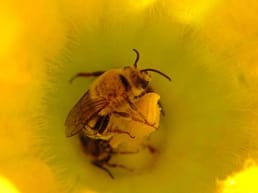
Long before pumpkin pie or jack-o'-lanterns, wild Cucurbita plants grew as hard, bitter, often toxic fruits in the New World.[2] They were not the heavy orange pumpkins people carve today. Some wild forms were closer to tough, small gourds, protected by shells and by a chemical bitterness strong enough to warn off many animals.[1]
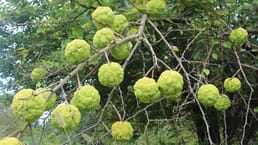
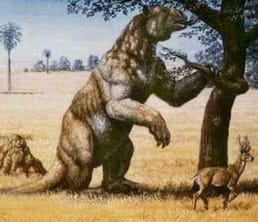
The bitterness came from cucurbitacins, compounds that can be toxic when eaten in quantity.[3] For a mouse or shrew, a few bites could be dangerous. For an elephant-sized herbivore, the dose was different. Logan Kistler and colleagues argued that mastodons, mammoths, giant ground sloths, and other large Ice Age mammals could eat these fruits and pass the seeds along in their droppings, moving Cucurbita across the landscape.[1]
A hard fruit on the ground could only travel so far by itself. Inside a mastodon, it became cargo. The animal got pulp, the plant got distance, and the seed came out somewhere new, dropped with fertilizer into disturbed ground.
When the Giant Seed Carriers Disappeared
About 11,000 to 14,000 years ago, many of the New World’s great mammals disappeared, including mastodons and giant ground sloths.[3] For Cucurbita, that meant more than the loss of an eater. It meant the loss of a delivery system. Without elephant-sized animals spreading seeds, a wild fruit could only colonize ground near where it fell, as one Penn State account put it, “as far as the pumpkin rolls.”[3]
The ground changed under the vines as well. Researchers noted that Cucurbita are weedy plants suited to disturbed habitats, and that megafauna helped create patchy, churned-up environments.[3] As those animals vanished, the wild plants appear to have declined. Ancient DNA work comparing modern wild plants, domesticated plants, and archaeological specimens suggested that some lineages later domesticated by people are now extinct in the wild.[3]
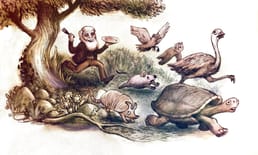
Early people may not have looked at those fruits and seen supper. Wild pumpkins and squashes were bitter and toxic enough that researchers doubt they were first prized as food.[3] Kistler has suggested that they may have been useful in the way bottle gourds were useful, as containers, tools, or fishnet floats.[3] A hard shell, emptied out, can become a bowl, a float, or a piece of portable technology.
Around 10,000 years ago, humans began domesticating pumpkins, squash, and gourds.[1] Over generations, people favored plants that were less bitter, less toxic, more useful, and eventually more pleasant to eat. Kistler described the process as co-evolution: humans turned something wild and inedible into food, while the plants gained a new partner after their giant seed carriers disappeared.[1]
A Crop With Several Beginnings
Cucurbita did not become a single crop in a single place. Kistler noted that it may have been domesticated at least six different times in six different places, a sign of how widespread the human partnership became.[3] Today that history survives in pumpkins, squash, gourds, zucchini, and butternut squash, all part of a genus whose wild relatives once depended on giants.[1]
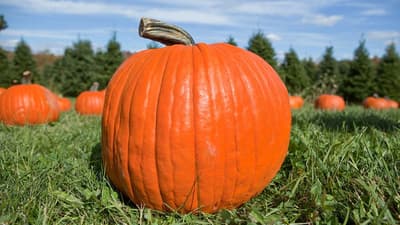
The modern pumpkin patch looks tidy and harmless, with vines, curling stems, and orange globes lined up for porches and pies. Its older story runs through mastodon dung, toxic bitterness, vanished mammals, and human hands choosing one hard-shelled fruit over another. The jack-o'-lantern on the porch is a rescued seed carrier with a candle inside.