
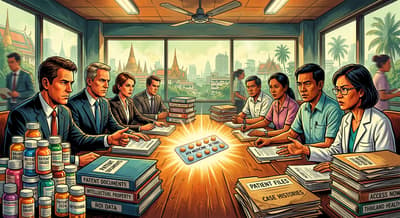
In 2007, Thailand did something wealthy countries are often warned never to do. It looked at the price of a life-saving HIV drug, looked at the patent behind it, and said the math no longer worked.[1]
The drug was Kaletra, Abbott's combination of lopinavir and ritonavir, an important second-line treatment for people whose first HIV regimen had stopped working.[1][2] Abbott sold it in Africa for about $500 per patient per year, but in Thailand the price was more than $4,000. Even after a discount offer, Thai officials said it was still too expensive for a country trying to sustain a national HIV program.[1]
So Thailand used one of the driest but most consequential tools in global health, compulsory licensing. Under World Trade Organization rules, countries can authorize cheaper generic versions of patented medicines during a public health emergency. Thailand used that flexibility in early 2007 to open the way to a more affordable version of Kaletra.[1][3]
Abbott responded by announcing it would not register seven new drugs in Thailand, including the newer heat-stable form of Kaletra, which mattered in a hot country where dependable refrigeration was hardly universal.[1] That is the point where a patent dispute stops sounding abstract. It is no longer just about intellectual property. It is about whether the medicine can survive the climate, reach a clinic, and get to a patient whose options are running out.[1]
Thailand held firm. Later scholarship found that the country's government-use licensing policy on seven patented drugs, including lopinavir/ritonavir, was projected to save roughly $370 million over five years by opening the door to generic competition.[4] Researchers comparing Thailand and Brazil also concluded that compulsory licensing helped preserve the financial sustainability of universal antiretroviral programs threatened by monopoly pricing.[3]
The fight mattered because it exposed the double life of a patent. Used one way, it rewards invention. Used another, it becomes leverage over a public health system that still has to decide who gets treated and who waits. Thailand did not abolish the rules. It used the exception the rules themselves allowed, and forced the rest of the world to confront what patents are for when people need the drug now.[1][3][4]