
The jet stream was hiding in plain sight above Japan, and one reason the wider world missed it was the language chosen to describe it.
In the 1920s, Japanese meteorologist Wasaburo Oishi watched small pilot balloons climb into the sky from Tateno, an upper-air observatory northeast of Tokyo. Those balloons revealed a powerful belt of high-altitude westerly wind near Mount Fuji. Oishi was not merely noticing a windy day. Between March 1923 and February 1925, he made 1,288 upper-air observations, enough to show that fierce winter winds near 10 kilometers up were a persistent feature of the atmosphere over Japan.[1]
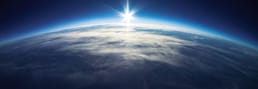
Today we call that river of fast air the jet stream. It matters every time an airline catches a tailwind, every time a storm track bends across a continent, and every time weather forecasters watch cold and warm air wrestle along the midlatitudes. NASA describes the polar jet as a fast-moving belt of westerly winds created where cold Arctic air and warmer tropical air meet.[2] NOAA explains it more simply: the jet stream is one of the atmosphere's great steering currents, shaping weather far below it.[3]
Oishi's measurements should have made him famous in meteorology. Instead, his work mostly stayed local. He published his 1926 report from the Aerological Observatory of Tateno in Esperanto, the constructed international language invented in the late 1800s to help people communicate across borders.[1] That choice was idealistic and strangely practical. Oishi was also president of the Japan Esperanto Society, and he seems to have wanted a neutral language that would carry Japanese science to the world.[4]
The problem was that the world's meteorologists were not waiting for major atmospheric discoveries in Esperanto. Smithsonian's Air and Space Magazine later summed up the odd result: the discovery of the jet stream may have been ignored partly because it arrived in a language few scientists in the field could easily read.[4]
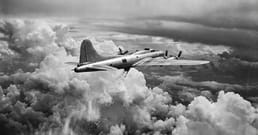
The unexpected angle is that this was not an obscure curiosity. During World War II, American B-29 crews flying over Japan ran into winds so strong that bombs missed targets and fuel calculations failed. Japan also tried to use high-altitude winds for Fu-Go balloon bombs, launching thousands of balloon-borne explosives across the Pacific.[4] The same invisible river that Oishi had charted in peacetime became a military surprise when the world finally had aircraft flying high enough to feel it.
Oishi did not discover the sky's highway because he had satellites, radar, or global computer models. He did it by releasing balloons, tracking them carefully, and trusting the pattern that emerged. The lesson is almost painfully modern: a discovery can be correct, careful, and important, yet still fail to travel if it is published where the right readers never look.
Sources
- Oishi's Observation: Viewed in the Context of Jet Stream Discovery - Bulletin of the American Meteorological Society
- The Polar Jet Stream - NASA Scientific Visualization Studio
- What is the jet stream? - NOAA Climate.gov
- Why Was the Discovery of the Jet Stream Mostly Ignored? - Smithsonian Air and Space Magazine
- Jet stream - Wikipedia