During the Vietnam War, the United States tried something that sounds invented until you hit the paperwork: it tried to turn rain into a weapon.[1]
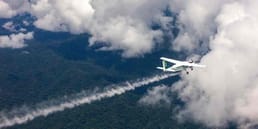
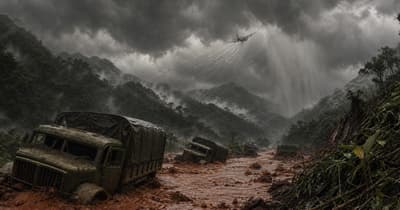
The program was called Operation Popeye. Beginning in 1967, U.S. aircraft flew cloud-seeding missions over parts of Laos, North Vietnam, and nearby border regions, releasing silver iodide and lead iodide into storm clouds in hopes of extending the monsoon season.[1][2] The goal was plain enough. More rain meant more mud, washed-out crossings, landslides, and harder travel along the Ho Chi Minh Trail, the supply network North Vietnam used to move men and matériel south.[1][2]
What makes the story stranger is that it did not begin as fringe fantasy. Weather control had been a serious scientific and political obsession since the late 1940s, when researchers showed that dropping dry ice into clouds could trigger precipitation.[3] By the 1950s, American officials and scientists were openly imagining weather as a strategic technology, something a superpower might try to master before an enemy did.[3] Operation Popeye was the moment that idea crossed into military policy.[2]
The documentary trail is blunt. A 1967 State Department memorandum described the test phase as "outstandingly successful," saying that 82 percent of seeded clouds produced rain soon after seeding.[2] In one case, the memo said rainfall continued after a cloud drifted east across the Vietnam border and dumped nine inches of rain in four hours on a U.S. Special Forces camp.[2] The same document also spelled out the obvious problem: once weather is the weapon, its effects do not stay politely inside the target box.[2]
That was the real danger. Bombs have blast zones. Weather does not respect borders, battle plans, or civilians. U.S. officials worried about crop damage, flooding, ecological disruption, and spillover into friendly territory in Laos and Thailand.[2] After a classified 1974 briefing, Senator Claiborne Pell warned that the country was opening "Pandora's box."[1]
The most important consequence may have come afterward. The United States formally renounced hostile climate modification in 1972, and the backlash around projects like Operation Popeye helped drive the Environmental Modification Convention, signed in 1977 and in force by 1978.[1][4] The treaty bars countries from using environmental modification techniques as weapons when the effects are widespread, long-lasting, or severe.[4]
Why does this still matter? Because the underlying temptation never vanished. Cloud seeding for water supply is legal and still used in parts of the world today.[1] Operation Popeye is a reminder that once governments convince themselves they are only nudging nature, the moral line can slide fast. Sometimes weaponizing the sky does not require a science-fiction machine. Sometimes it just requires a storm cloud, a canister, and a war.[1][4]
Sources
- With Operation Popeye, the U.S. government made weather an instrument of war, Popular Science
- Memorandum From the Deputy Under Secretary of State for Political Affairs to Secretary of State Rusk, January 13, 1967, Office of the Historian
- Weather Control as a Cold War Weapon, Smithsonian Magazine
- Environmental Modification Convention, U.S. Department of State