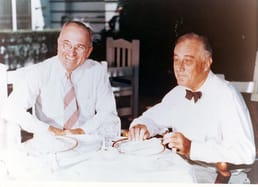
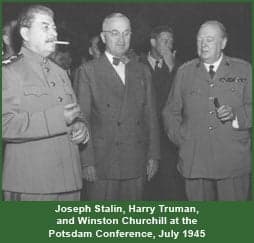
On the back of a Potsdam photograph, Harry Truman later wrote himself into the scene as the man holding the secret. Stalin, he suggested, had not understood the hint about America’s powerful new weapon. The photograph showed Stalin talking with Truman and Secretary of State James Byrnes on July 19, 1945. The note on the reverse carried the real irony: Truman thought he had hidden the atomic bomb from a man whose spies had been reporting on it for years.[5]
When Truman told Stalin about the Manhattan Project at Potsdam in July 1945, Stalin barely reacted because Soviet intelligence had known about the atomic bomb program since 1941, years before Truman became president.
Truman had been president only a few months when he reached Potsdam, Germany, in July 1945. Europe’s war was over, but Japan had not surrendered. After meeting Stalin on July 17, Truman wrote in his diary that the Soviet leader would enter the war against Japan on August 15: “Fini Japs when that comes about.”[3][4]
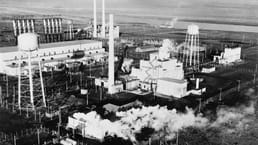
A different message had arrived from New Mexico. On July 16, the Trinity test, the first atomic bomb detonation, had succeeded.[1] Truman’s diary soon folded the weapon into code. He wrote that he had discussed “Manhattan” with Churchill, that “it is a success,” and that he would tell Stalin “at an opportune time.”[4]
The successful test changed the arithmetic at the conference table. If the bomb could end the war without an invasion of Japan, Truman and his advisers were less eager for Soviet help. Stalin’s entry might shorten the fighting, but it could also give him a place in deciding Japan’s postwar future.[1]
The Quiet Conversation
On July 24, after a Big Three meeting, Truman walked over to Stalin. No official record of the exchange has been found, but several men left accounts of the small conversation.[2] Truman later wrote that he “casually mentioned” the United States had “a new weapon of unusual destructive force.” Stalin showed “no special interest,” Truman said, and replied that he hoped the United States would make “good use of it against the Japanese.”[2]
Byrnes remembered Truman saying afterward that he had told Stalin about a new bomb “far more destructive than any other known bomb.” Admiral William Leahy recalled Truman believing Stalin had “no conception” of what he was being told. Churchill, watching from about five yards away, tried to read Stalin’s reaction.[2]
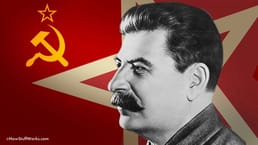
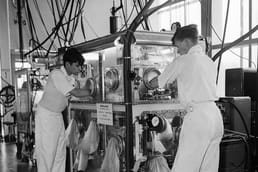
Stalin’s calm was not ignorance. The Department of Energy’s Manhattan Project history says Soviet intelligence had been receiving information about the American atomic bomb program since the fall of 1941.[1] Another Department of Energy note states the irony more bluntly: because of Soviet espionage, Stalin knew about the atomic bomb project three years before Truman did.[5]
Truman had inherited the Manhattan Project after Franklin Roosevelt’s death in April 1945. Stalin, sitting across from him as if hearing a vague hint about a new battlefield tool, had years of secret reports behind that controlled reply.[5]
The Decision Afterward
The next day, July 25, the decision to use the bomb became formal. A directive written by General Leslie Groves, approved by Truman, and issued by Secretary of War Henry Stimson and General George Marshall ordered the 509th Composite Group to attack Hiroshima, Kokura, Niigata, or Nagasaki, in that order of preference, as soon after August 3 as weather allowed.[1]
No further authorization was required for later atomic attacks. Additional bombs were to be delivered as they became available against cities still on the target list. Stalin was not told.[1]
By then the machinery was already moving. Colonel Paul Tibbets’s 509th had been dropping dummy “pumpkin” bombs over Japan for practice and to accustom defenders to small formations of B-29s. On July 26, Little Boy, without its nuclear components, arrived at Tinian aboard the USS Indianapolis. The final nuclear components followed by five C-54 cargo planes.[1]
The Potsdam exchange survives as a scene of mismatched assumptions. Truman believed he had dangled a secret. Stalin received it as ordinary news. What remains is the photograph from the conference, and on its back, Truman’s note about a man who supposedly did not understand.[5]
Sources
- U.S. Department of Energy, “Potsdam and the Final Decision to Use the Bomb”
- Office of the Historian, Foreign Relations of the United States, Potsdam Conference, 1945
- National Security Archive, “Truman’s Potsdam Diary”
- Alpha History, “Harry Truman’s diary entries in Potsdam, 1945”
- U.S. Department of Energy, “Potsdam Note”